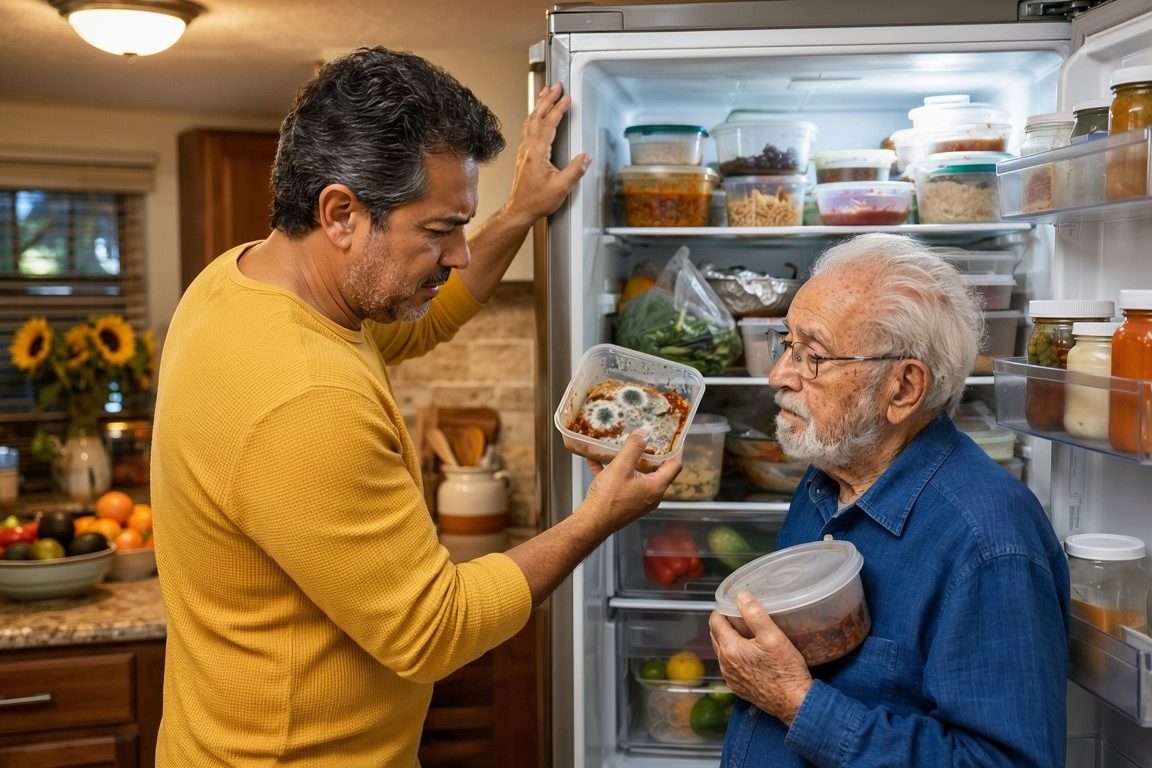
Step by step
What not to do
- Do not try to throw everything away at once. This will cause extreme distress, destroy trust, and may lead to the person hiding items or becoming more secretive.Instead, use a harm reduction approach: remove only what is immediately dangerous, and do it slowly, with the person's involvement when possible.
- Do not shame or criticize the person. Saying things like 'This is disgusting' or 'How can you live like this?' will only increase their shame and defensiveness. Hoarding is often tied to deep emotional needs, control, comfort, identity. Approach with empathy: 'I see you have a lot of things that are important to you. Let's work together to keep you safe.'
- Do not ignore the problem hoping it will go away. Hoarding in dementia tends to worsen over time, especially as cognitive decline progresses. The longer you wait, the more dangerous the situation becomes. Early intervention, even just a safety walk-through, can prevent a crisis.
- Do not move items without telling the person. This can feel like a violation and may trigger anger, anxiety, or even aggression. Always ask permission or explain what you are doing: 'I am going to move this stack of papers away from the stove so it does not catch fire. I will put them in this box for you.'
- Do not try to reason or use logic to convince them to declutter. People with dementia often lack insight into their hoarding behavior. Arguments about 'you have too much stuff' or 'this is a fire hazard' will likely not work.Instead, focus on the specific risk and offer a concrete solution: 'Let's move this pile so you can walk safely to the bathroom.'
- Do not forget to take care of yourself. Caregiver burnout is real, and dealing with hoarding can be emotionally and physically exhausting. Set boundaries, ask for help from family or professionals, and give yourself permission to step away when needed. Your well-being matters too.
Key points
- Hoarding becomes a safety risk when it blocks exits, creates fire hazards, causes falls, or leads to unsanitary conditions like spoiled food or pests.
- Use a harm reduction approach: focus on removing immediate dangers, not on eliminating all clutter. This reduces conflict and builds trust.
- Always prioritize safety over cleanliness. A clear path to the bathroom and exits is non-negotiable.
- Secure dangerous items, chemicals, sharp objects, medications, and weapons, to prevent accidents. Always consult a clinician before locking up medications.
- Involve the person in decisions when possible, and never throw things away without their knowledge or consent.
- You do not have to do this alone. Reach out to community resources, professional cleaners, or a geriatric care manager for help.
Videos
 Hoarding Behaviors | Insights and InnovationsThis video offers practical insights into why hoarding behaviors emerge in dementia and how to respond with empathy and safety in mind.
 Hoarding Disorder in Geriatric PatientsA clinical overview of hoarding disorder in older adults, including how to assess risk and when to involve professionals.
 Ep. 239: Hoarding, How Do We Get Here?Explores the emotional and psychological roots of hoarding in dementia, helping caregivers understand the 'why' behind the behavior.
 Ep. 260: When Collecting Isn't Collecting AnymoreHelps distinguish between harmless collecting and dangerous hoarding in the context of dementia.
Background
What Makes Hoarding a Safety Risk in Dementia?
In dementia, hoarding often stems from a deep need for control and comfort. A person may collect items, papers, clothes, food, even animals, because they provide a sense of security in a world that feels increasingly confusing. The problem escalates when the sheer volume of stuff begins to create real physical dangers. Unlike a collector who organizes and displays items with pride, a person with dementia who hoards may have narrow pathways through stacks of clutter, making it impossible to move freely. Countertops, sinks, stoves, and stairs become piled with things, and the person may not be able to use areas for their intended purpose, like sleeping in a bed or cooking on a stove. This is when hoarding becomes a safety risk: when it directly threatens the person's health, mobility, or ability to get help in an emergency.
The Most Common Safety Risks to Watch For
The dangers are real and varied. Falls are a top concern, clutter on floors, loose items, and narrow pathways increase the risk of tripping, especially for someone with balance or vision problems. Fire hazards are another major risk: piles of paper, fabric, or other flammable materials near heat sources (like stoves, space heaters, or electrical outlets) can ignite quickly. Spoiled food and garbage attract pests like rodents and insects, which can spread disease and create unsanitary conditions. Blocked exits, doors, windows, or hallways, mean that in a fire or medical emergency, your loved one may not be able to escape or be reached by first responders. There is also the risk of injury from shifting or falling piles of items, which can trap a person or cause crushing injuries. Finally, hoarding can lead to social isolation, family conflict, and even legal issues like eviction or condemnation of the home. Recognizing these risks early is key to preventing a crisis.
Why a Harm Reduction Approach Works Best
A harm reduction approach means you focus on minimizing the dangerous consequences of hoarding without trying to eliminate the hoarding itself. This is especially important in dementia, because the person may lack insight into why their behavior is risky. You do not need them to agree that they have a problem. Instead, you work to make the environment safer while respecting their need to keep certain items. For example, you might remove spoiled food from the fridge but leave stacks of old newspapers in the living room. You might clear a path to the bathroom but not touch the piles in the bedroom. This approach reduces conflict, builds trust, and keeps the focus on safety rather than on 'cleaning up' or 'getting rid of things.' Over time, as trust grows, you may be able to make more changes. But the first priority is always to prevent immediate harm.
Practical tools
6
The 'Safety First' Script
A set of phrases to use when addressing a safety risk. Instead of saying 'You have too much stuff,' say: 'I am worried about you tripping on this pile. Let's move it to the side so you can walk safely.' Or: 'I noticed the stove has things on it. Let's clear it off so it does not accidentally turn on.' Keep the focus on safety, not on the hoarding itself.
The 'Safe Zone' Setup
Designate a small area, like a corner of a room or a single shelf, where the person can keep items they value without creating a hazard. Use a clear bin or a small table. Explain: 'This is your special spot. You can keep anything you want here, and I will not touch it.' This gives them control and reduces the urge to spread clutter elsewhere.
Daily Safety Checklist
A simple list you can run through each evening:
Check off each item and address any issues immediately.
The 'One In, One Out' Rule
If the person is still bringing new items into the home, gently introduce a rule: for every new item that comes in, one old item must go out (to a donation bin or trash). This helps stabilize the volume without a major purge. Frame it as a game or a helpful habit: 'Let's find something to let go of so we have room for this new thing.'
Professional Hoarding Cleanup Services
If the situation is severe, consider hiring a company that specializes in hoarding cleanup. These professionals are trained to handle biohazards, pests, and emotional distress. They work with compassion and discretion. Search online for 'hoarding cleanup [your city]' or ask your local Area Agency on Aging for referrals.
The 'Rummage Box' Strategy
If the person enjoys rummaging through items, provide a designated box or drawer filled with safe, interesting objects, like old keys, fabric scraps, or photos. This gives them a constructive outlet for the behavior and reduces the urge to rummage through dangerous areas like the kitchen or bathroom.
Different situations
Lewy body dementia or Parkinson's disease dementia
These conditions often involve visual hallucinations and motor symptoms. The person may hoard items they believe are connected to hallucinations or may have difficulty moving safely through clutter. Prioritize clearing pathways and removing items that could be mistaken for something else (e.g., a pile of clothes that looks like a person). Also, be aware that they may hide items in unusual places due to paranoia. Use a harm reduction approach with extra patience.
Late-stage dementia
In late stages, the person may not be able to communicate or understand safety risks. You may need to take more direct action, such as removing all hazardous items and creating a completely clutter-free environment. Focus on fall prevention, fire safety, and infection control. Involve a home health aide or occupational therapist to assess the home and recommend modifications. Legal steps like guardianship may be necessary if the person cannot make safe decisions.
Spouse vs. adult child caregiver
A spouse may have more emotional attachment to the shared home and may feel guilty about 'invading' the person's space. An adult child may have more distance and be able to see the risks more clearly. If you are a spouse, consider asking a trusted friend or professional to help with the safety assessment, it can be easier to hear from someone outside the relationship. If you are an adult child, be respectful of the spouse's role and involve them in decisions.
Living in a facility (assisted living or nursing home)
In a facility, hoarding may be limited to a single room or closet. Work with staff to identify safety risks: blocked doorways, items near heat vents, spoiled food. The facility may have policies about what can be kept. Advocate for your loved one to have a small 'safe zone' for personal items. If the hoarding is severe, ask for a care plan meeting to address it as a team.
Medicaid or low-income resources
If finances are tight, look for free or low-cost resources: your local Area Agency on Aging may offer hoarding support groups or referrals to volunteer cleanup crews. Some churches or community organizations have 'helping hands' programs. You can also ask adult protective services for a wellness check, they may connect you to services. Do not let cost stop you from seeking help; there are options.
For the doctor
5
- Ask your loved one's doctor or neurologist: 'Given their dementia, what is the safest way to manage hoarding that involves food, medications, or sharp objects?'
- Discuss with a social worker or geriatric care manager: 'Can you help me assess the home for safety risks and connect me with hoarding-specific resources in our community?'
- If there are guns or other weapons in the home, ask a clinician or law enforcement liaison: 'What is the safest way to remove firearms from a home where someone has dementia and hoarding behaviors?'
- If the person is on medications that could be misused or confused with food, ask the pharmacist: 'Can we use a locked medication box or a blister pack to prevent accidental overdose or mixing?'
- If the hoarding is causing severe unsanitary conditions (e.g., human or animal waste, mold, pests), ask a public health nurse or adult protective services: 'What steps should I take to protect my loved one's health without causing them distress?'