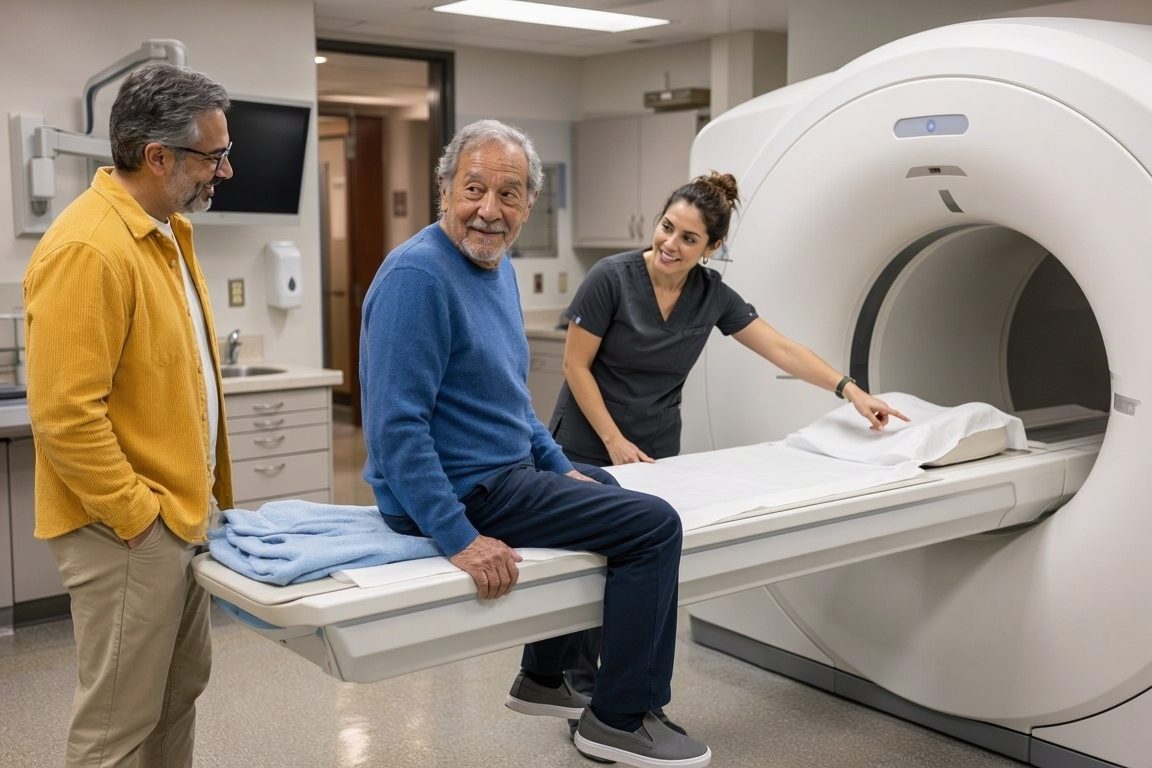
Step by step
What not to do
- Do not assume a positive amyloid scan alone confirms Alzheimer's dementia, some older adults have amyloid plaques without cognitive symptoms.
- Do not ignore the possibility of mixed dementia (e.g., Alzheimer's plus vascular damage) even with a positive amyloid scan.
- Do not rely on a single scan to predict disease progression or specific symptoms, use it as one piece of the diagnostic puzzle.
- Do not pressure the doctor for a diagnosis before results are back, rushing can lead to incorrect assumptions.
- Do not skip the scan out of fear, an accurate diagnosis can open doors to treatments and planning that improve quality of life.
Key points
- FDG-PET shows how the brain uses glucose; different dementia types have different patterns of reduced glucose use.
- Amyloid PET detects sticky plaques of beta-amyloid protein, a hallmark of Alzheimer's disease.
- PET scans are not routine, they are used when the diagnosis is unclear or when early and accurate diagnosis affects treatment.
- A positive amyloid scan strongly suggests Alzheimer's pathology but does not predict symptom progression or severity.
- A negative amyloid scan makes Alzheimer's unlikely but does not rule out other dementias like Lewy body, frontotemporal, or vascular dementia.
- PET scans are one piece of the diagnostic puzzle; they must be combined with history, exam, cognitive testing, and sometimes other imaging or lab tests.
Videos
 Courageous Conversation with Barbara Grabher from Life Molecular ImagingThis video explains the science behind amyloid PET imaging and how it is used in clinical practice, directly from an expert in molecular imaging.
 4 Most Common Types of Dementia in AgingThis video provides a clear overview of the four most common dementia types, which helps you understand why PET scans are used to differentiate them.
 PCALECTURE with UCSD neurologist Dr. Douglas GalaskoDr. Galasko discusses the role of PET scans and other biomarkers in diagnosing posterior cortical atrophy, a rare form of Alzheimer's, giving insight into how scans are used in complex cases.
 Are We Actually Making Progress in Dementia Research? (NIH 2025 Update)This NIH update covers recent advances in dementia research, including the use of PET scans in clinical trials and new treatments, helping you understand the bigger picture.
2 more videos
 Dr. Daniel I. Kaufer Lecture series: Diagnosis and Management of Dementia with Lewy BodiesThis lecture explains how PET scans (especially FDG-PET and DaTscan) are used to diagnose Lewy body dementia, a condition that can be tricky to identify.
 Alzheimer's & Dementia Starter Kit Part 1This starter kit video provides a beginner-friendly introduction to dementia diagnosis, including when and why doctors might order PET scans.
Background
What Are FDG and Amyloid PET Scans?
PET scans are a type of imaging that shows how your brain is working, not just its structure. An FDG-PET scan measures how well brain cells are using glucose (sugar), which is the brain's main fuel. When brain cells are not working properly, they use less glucose, and this shows up as darker or 'hypometabolic' areas on the scan. Different dementia types have different patterns of hypometabolism, so the scan can give clues about which type is present. For example, Alzheimer's disease often shows reduced glucose use in the back of the brain, while frontotemporal dementia affects the front and sides.
An amyloid PET scan, on the other hand, looks for a specific protein called beta-amyloid that builds up into sticky plaques in the brain. This is a hallmark of Alzheimer's disease. The scan result is either 'positive' (meaning amyloid plaques are present) or 'negative' (meaning they are not). A positive amyloid scan strongly suggests Alzheimer's disease is the cause of cognitive decline, but it does not mean the person will definitely get dementia, some older adults have amyloid plaques without symptoms. These scans are not covered by Medicare for people under 65 and can be expensive, so they are used selectively when the diagnosis is uncertain.
How Do They Differ by Dementia Type?
Each major dementia type has a characteristic pattern on FDG-PET. In Alzheimer's disease, hypometabolism typically starts in the back of the brain, especially the temporal and parietal lobes, and later spreads. In Lewy body dementia, the pattern often shows reduced activity in the occipital lobe (the visual processing center) and a 'cingulate island sign' where the back part of the brain is relatively spared. Frontotemporal dementia shows low glucose use in the frontal and anterior temporal lobes. Vascular dementia may show patchy, uneven areas of low activity due to multiple small strokes.
Amyloid PET is more specific: a positive scan is highly suggestive of Alzheimer's disease pathology, but it can also be positive in mixed dementia (where Alzheimer's and another type, like vascular dementia, occur together). In Lewy body dementia, amyloid PET can be positive in about half of cases because many people with Lewy body dementia also have Alzheimer's changes. In frontotemporal dementia, amyloid PET is usually negative, which helps rule out Alzheimer's as the cause.
What Do the Results Mean for Your Loved One?
A PET scan result is not a standalone diagnosis, it is one piece of the puzzle. The doctor will combine it with the medical history, physical exam, cognitive testing, and sometimes other tests like MRI or spinal fluid analysis. A positive amyloid scan means Alzheimer's pathology is likely present, but it does not tell you how fast the disease will progress or what symptoms will appear. A negative amyloid scan makes Alzheimer's unlikely, but other dementias like Lewy body, frontotemporal, or vascular dementia are still possible.
For caregivers, the most important thing is that an accurate diagnosis can guide treatment and planning. For example, if Alzheimer's is confirmed, anti-amyloid medications like lecanemab or donanemab might be an option in the earliest stages. If Lewy body dementia is suspected, certain medications that are harmful in that condition (like some antipsychotics) can be avoided. If frontotemporal dementia is diagnosed, the focus shifts to behavioral management and support. Knowing the type also helps you prepare for the specific challenges ahead, such as visual hallucinations in Lewy body dementia or personality changes in frontotemporal dementia.
Practical tools
6
Doctor Visit Prep Sheet
Write down:
Bring to every appointment.
Symptom Diary Template
For two weeks, note daily: date, time, what happened (e.g., 'could not find the bathroom'), who was present, and how your loved one felt afterward. Use a notebook or free app like Caring Village.
Phrases to Say to Your Loved One
If nervous: 'This is just a special camera that takes pictures of your brain. It does not hurt, and I will be right outside.' If asked about results: 'We are waiting for the doctor to look at the pictures carefully. We will talk about it together when we know.'
Insurance Coverage Checklist
Call and ask:
Note the date, time, and name of the person you spoke with.
Comfort Kit for Scan Day
Pack:
Result Interpretation Guide
After the scan, get a copy of the report. Look for:
Ask the doctor to explain any unclear terms.
Different situations
Lewy body dementia suspected
If your loved one has visual hallucinations, fluctuating attention, or REM sleep behavior disorder (acting out dreams), the doctor may order an FDG-PET to look for occipital hypometabolism or a DaTscan to check dopamine function. Amyloid PET may be positive in about half of cases, so a positive result does not rule out Lewy body dementia. Ask the doctor specifically about the 'cingulate island sign' on FDG-PET, which is more common in Lewy body dementia.
Early-stage Alzheimer's (mild cognitive impairment)
If your loved one is in the earliest stage, an amyloid PET can confirm Alzheimer's pathology and open the door to anti-amyloid medications like lecanemab or donanemab. These drugs require regular IV infusions and can slow progression modestly. Discuss with your clinician whether the benefits outweigh the risks (such as brain swelling or bleeding). Also ask about clinical trials for new treatments.
Frontotemporal dementia suspected
FDG-PET is the preferred scan for frontotemporal dementia because it shows hypometabolism in the frontal and anterior temporal lobes. Amyloid PET is usually negative, which helps rule out Alzheimer's. If the scan is negative for amyloid but symptoms suggest FTD, the doctor may recommend genetic testing or a spinal fluid test for tau and TDP-43 proteins. Behavioral management strategies are key here, focus on routine, redirection, and avoiding triggers.
Mixed dementia (Alzheimer's + vascular)
If your loved one has risk factors like high blood pressure or diabetes, the doctor may suspect mixed dementia. An amyloid PET can confirm Alzheimer's pathology, but the scan will not show the vascular damage. An MRI is better for seeing small strokes or white matter changes. Treatment will likely include managing vascular risk factors (blood pressure, cholesterol, blood sugar) along with Alzheimer's medications. Ask the doctor: 'How do we treat both conditions at the same time?'
Younger-onset dementia (under 65)
If your loved one is under 65, PET scans may not be covered by Medicare and can cost thousands of dollars out of pocket. Ask the doctor about financial assistance programs or clinical trials that cover scan costs. Younger-onset dementia is more likely to have a genetic cause, so genetic counseling may be recommended. The diagnostic process can be longer and more complex, be patient and advocate for a referral to a specialized memory clinic.
For the doctor
6
- Ask your doctor: 'Is a PET scan necessary for my loved one's diagnosis, or can we rely on clinical evaluation and other tests?'
- Ask: 'What are the risks of the radioactive tracer, especially if my loved one has kidney problems or allergies?'
- Ask: 'If the scan is positive for amyloid, what are the specific treatment options, including anti-amyloid medications and clinical trials?'
- Ask: 'How will the scan results change the management plan, such as medications, lifestyle recommendations, or referrals to specialists?'
- Ask: 'If the scan is negative for amyloid but symptoms persist, what is the next step in the diagnostic process?'
- Ask: 'Are there any contraindications to PET scanning for my loved one, such as claustrophobia, inability to lie still, or metal implants?'