Step by step
What not to do
- Do not stop trazodone abruptly or change the dose on your own. This can cause rebound insomnia, increased agitation, or withdrawal effects. Always consult the prescribing clinician first.
- Do not assume the leg movements are just 'restlessness' or 'agitation' from dementia. RLS is a distinct condition that requires specific management. Ignoring it can lead to worsening sleep deprivation for both the person and the caregiver.
- Do not use over-the-counter sleep aids like diphenhydramine (Benadryl, Tylenol PM) to help the person sleep. These antihistamines can actually worsen RLS and have anticholinergic effects that are harmful for people with dementia, increasing the risk of confusion and falls.
- Do not try to physically restrain the person's legs or force them to stay still. This will increase their distress and may lead to agitation or aggression. The urge to move is involuntary and uncomfortable; movement provides necessary relief.
- Do not rely solely on medication to solve the problem. Non-pharmacological approaches like leg massage, warm baths, and mental alerting activities are effective and should be maintained even if medication is changed. They also have no side effects.
- Do not ignore the possibility that other medications the person is taking (like antipsychotics or certain antidepressants) may also be contributing to RLS. A full medication review by a clinician is essential.
Key points
- Trazodone, a common sleep aid for dementia, can trigger or worsen restless legs syndrome (RLS), causing uncomfortable leg sensations and an urge to move.
- Recognize RLS by observing restlessness, leg movements, or getting up frequently at bedtime, especially if the person cannot describe the sensation.
- Non-pharmacological steps like leg massage, warm baths, gentle movement, mental alerting activities, and weighted blankets (with safety precautions) can provide significant relief and should be tried first.
- Do not stop or change trazodone without medical guidance; consult the prescribing clinician with a symptom log and a list of all medications.
- Alternatives to trazodone for sleep that are less likely to cause RLS include gabapentin, pregabalin, or bupropion, but these must be discussed with a doctor.
- Personalize the approach based on the dementia type (especially Lewy body), the person's ability to communicate, the caregiver role, and the care setting.
Background
What Is Restless Legs Syndrome and How Does Trazodone Trigger It?
Restless legs syndrome (RLS) is a sensorimotor disorder that causes distressing sensations deep inside the limbs, typically occurring at bedtime or when the person is resting. These sensations are often described as creeping, crawling, tingling, burning, or itching, and they create an overwhelming urge to move the legs. Moving the legs provides temporary relief, but the sensations return when the person stops moving, making it very hard to fall asleep or stay asleep. This can significantly impact quality of life for both the person with dementia and their caregiver, as sleep disruption often worsens behavioral and psychological symptoms of dementia (BPSD).
Why Trazodone Specifically?
Trazodone is a frequently used antidepressant with complex effects on the serotonin system and moderate blockage of histamine receptors. While it is commonly prescribed for insomnia in people with dementia because it is sedating and generally considered safer than benzodiazepines, it belongs to a class of medications that can worsen or trigger RLS. Many case reports have demonstrated that antidepressants, especially selective serotonin reuptake inhibitors (SSRIs) and certain others like mirtazapine, can lead to RLS. Trazodone is included in this group. The exact mechanism is not fully understood, but it is thought to involve the medication's influence on serotonin and dopamine pathways in the brain. Dopamine dysfunction is closely linked to RLS, and medications that affect serotonin can indirectly disrupt dopamine signaling, leading to the characteristic leg sensations and urge to move.
How to Recognize RLS in a Person with Dementia
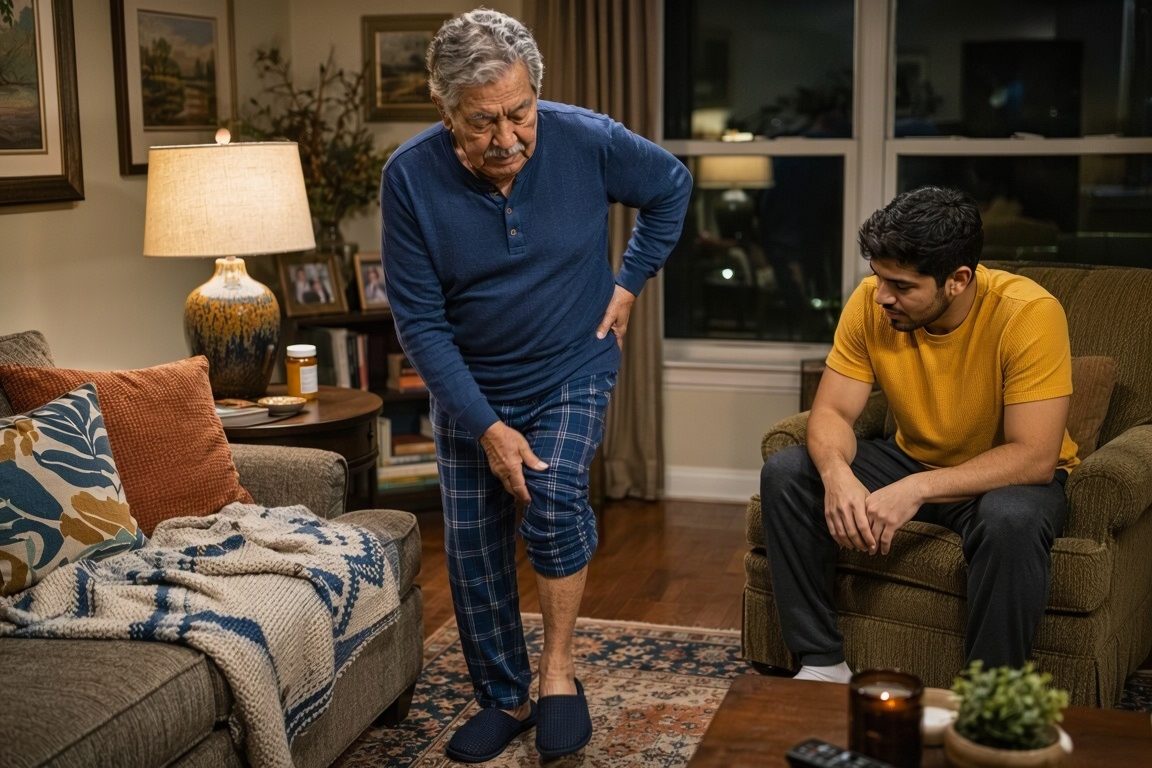
In someone with dementia, RLS may not be reported as a specific sensation. Instead, you might notice restlessness, frequent leg movements, kicking, or fidgeting when they are sitting or lying down, especially in the evening or at night. They may repeatedly get up and walk around, seem agitated or irritable at bedtime, or have difficulty settling into sleep. It is important to distinguish RLS from other movement issues like periodic limb movements of sleep (which occur during sleep and are not consciously felt) or REM sleep behavior disorder (which involves acting out dreams). A sleep study can help differentiate these conditions, but a careful observation of when the movements occur and whether they are accompanied by an apparent urge to move is a good starting point. If the person can communicate, ask them if their legs feel funny, creepy, or like they need to move.
Practical tools
6
RLS Symptom Log Template
Create a simple chart with columns for: Date, Time of Bed, Time Leg Movements Start, Description (e.g., kicking, rubbing legs, getting up), Duration, What Helped (e.g., walking, massage), and Any Words the Person Said. Use this to track patterns and share with the doctor. Example: 'Night 1: 9pm bed, 9:30pm started kicking, lasted 45 min, walking helped. Said 'legs feel funny'.'
Comfort Kit for Bedtime
Assemble a basket with:
Keep it near the bed so you can use it quickly without disrupting the routine.
Mental Alerting Activity Cards
Prepare a set of simple, non-electronic activities for pre-bedtime: a large-print crossword puzzle, a 'spot the difference' picture book, a simple jigsaw puzzle (e.g., 12-24 pieces), or a deck of cards for a game like 'Go Fish'. Rotate them to keep interest. The goal is to engage the brain and distract from leg sensations.
Weighted Blanket (20-30 lbs)
A weighted blanket can provide deep pressure stimulation, which may reduce the urge to move in RLS. Choose one that is about 10% of the person's body weight. Important safety: Use only if the person can easily remove it themselves and shows no signs of distress. Stop immediately if they appear uncomfortable, too warm, or try to push it away. Do not use if the person has claustrophobia, breathing difficulties, or cannot communicate discomfort. Consult the doctor before use if the person has any medical conditions like heart or lung problems.
Phrases to Say When They Are Restless
Use calm, reassuring language: 'I see your legs are bothering you. Let's try a warm cloth on them.' or 'Would you like to walk with me for a few minutes? That might help.' or 'Let's do a puzzle together to take your mind off it.' Avoid saying 'Stop moving' or 'Just lie still.'
Doctor Discussion Checklist
Before the appointment, write down:
Bring this list to the appointment.
Different situations
For a person with Lewy body dementia (LBD)
People with LBD are extremely sensitive to antipsychotics and many other medications. Trazodone is often used cautiously, but RLS can be more pronounced. Non-pharmacological approaches are even more critical. Avoid any anticholinergic medications (like Benadryl) completely. Discuss with the clinician whether a very low dose of a dopamine agonist (like ropinirole) might be considered, but be aware that these can also cause side effects in LBD. The sleep study is especially important to rule out REM sleep behavior disorder, which is common in LBD and requires different management.
For a person in late-stage dementia who cannot communicate
You will need to rely entirely on behavioral observation. Look for signs of distress: grimacing, moaning, repetitive leg movements, trying to get out of bed frequently. Use the comfort measures (massage, warm bath, weighted blanket) proactively as part of the bedtime routine. If the person is bedbound, gentle passive range-of-motion exercises for the legs may help. A sleep study may still be possible with a portable home device. Work closely with the hospice or palliative care team if applicable.
For a spouse caregiver vs. an adult child caregiver
A spouse may be more attuned to subtle changes in the person's sleep patterns but may also be more hesitant to question the doctor's prescription. An adult child may need to advocate more assertively for a medication review. Both should keep the symptom log and bring it to appointments. If the caregiver is also sleep-deprived, consider respite care or asking another family member to help with overnight monitoring for a few nights to break the cycle.
For a person living in a facility (nursing home or assisted living)
The facility staff may not be familiar with trazodone-induced RLS. Provide them with a written summary of the symptoms and the non-pharmacological steps that help (e.g., leg massage before bed, warm bath, weighted blanket). Ask the facility's nurse to document the leg movements in the daily log. Request a medication review by the facility's consulting pharmacist or the person's primary care doctor. Ensure the staff knows not to give any PRN (as-needed) sleep medications that might worsen RLS.
For a person with Alzheimer's disease
Trazodone is commonly used in Alzheimer's for sleep, and RLS may be underrecognized because the person cannot articulate the sensation. Be especially vigilant for new-onset restlessness at bedtime. The non-pharmacological steps are safe and effective. If a medication change is needed, the clinician may consider a low dose of gabapentin, which has some evidence for improving sleep in Alzheimer's without worsening RLS. Always discuss the risks of falls with any sleep medication.
For the doctor
6
- Ask your doctor: 'Could trazodone be causing or worsening my loved one's restless legs syndrome? What is your experience with this side effect?'
- If a medication change is considered, ask: 'What are the specific risks and benefits of switching to an alternative sleep aid, such as gabapentin, pregabalin, or bupropion, given my loved one's dementia diagnosis and other health conditions?'
- Ask about the possibility of a sleep study (polysomnography) to confirm RLS and rule out other sleep disorders like periodic limb movement disorder or REM sleep behavior disorder, especially if the person has Lewy body dementia or Parkinson's disease.
- Inquire about the appropriate dose of any new medication: 'What is the starting dose, and how should we monitor for side effects like dizziness, confusion, or increased fall risk?'
- Ask: 'Are there any other medications my loved one is taking that could be contributing to RLS, such as antipsychotics, antihistamines, or certain antidepressants? Should we consider reducing or stopping any of them?'
- Ask: 'Is a weighted blanket safe for my loved one given their medical history and ability to communicate discomfort? What signs should I watch for?'