Step by step
What not to do
- Do NOT say 'You're depressed, you need help.' This labels them and can trigger shame or defiance.Instead, say 'I'm worried about you and I want to help you feel better.'
- Do NOT argue with their denial. If they say 'I'm fine,' don't push back with 'No, you're not.' This creates a power struggle.Instead, accept their statement and gently revisit later: 'Okay, I'm glad. I'm here if that changes.'
- Do NOT use logic or facts to convince them. Dementia affects reasoning. Saying 'The doctor said you have depression' will likely be met with confusion or anger. Focus on feelings, not facts.
- Do NOT try to 'fix' their sadness with cheerfulness or forced positivity. Saying 'Cheer up!' or 'Look on the bright side!' invalidates their experience and can make them feel more alone.Instead, just sit with them in their sadness.
- Do NOT bring up depression in the middle of a conflict or when they are already agitated. Wait for a calm, neutral moment. Timing is everything.
- Do NOT assume that because they can't talk about it, they aren't feeling it. Many people with dementia experience deep emotions but lack the words. Your presence and gentle attention are more important than any conversation.
Key points
- Depression is common in early dementia but often goes unrecognized by the person themselves.
- Direct questions about depression usually backfire; use observation and gentle invitations instead.
- Validate feelings without trying to fix them; your presence is more powerful than words.
- Use side-by-side activities and shared memories to create safe openings for conversation.
- Never assume mood changes are just 'normal aging' – they may be treatable depression.
- Be patient and persistent; it may take many attempts to build trust and openness.
Videos
 5 TIPS FOR TALKING TO YOUR LOVED ONE WITH DEMENTIAOffers practical communication strategies that can be adapted for talking about depression, including how to avoid arguments and use validation.
 Why Might A Person With Dementia Become Depressed?Explains the link between dementia and depression, helping you understand the underlying causes and why your loved one may not recognize their own depression.
 Dementia and Depression in ElderlyCovers signs of depression in dementia and how to differentiate it from dementia progression, which is essential for knowing when to seek help.
 TELLING A PARENT WITH DEMENTIA ABOUT A DEATHWhile about grief, this video's approach to having difficult conversations with someone with dementia is directly applicable to talking about depression.
2 more videos
 Caring for a Stroke SurvivorDiscusses depression after stroke, which shares many features with dementia-related depression, and offers strategies for engagement and support.
 How to comfort someone with dementia during COVID-19 when they want you to visitDemonstrates how to validate feelings and redirect when a person with dementia is distressed, a skill that directly applies to depression conversations.
Background
Why They Don't Want to Talk About It
Many seniors with early-stage dementia fail to recognize the signs of depression in themselves. They may attribute their low mood, loss of interest, or irritability to 'just getting older' or to the frustration of memory lapses. As one expert notes, depressed seniors often do not seek treatment because they don't see their symptoms as depression. Additionally, the person with dementia may feel a deep sense of shame or fear about being labeled as 'depressed' or 'crazy,' especially if they grew up in an era when mental health struggles were stigmatized. They might also be in denial, deflecting conversations by insisting nothing is wrong or blaming their feelings on external circumstances.
The Role of Dementia in Depression
Depression is very common in the early stages of dementia. The person is often aware of their cognitive decline, which can trigger profound grief, anxiety, and a loss of identity. This is not simply 'normal sadness' – it is a clinical condition that deserves attention. However, because dementia also affects language and insight, your loved one may not be able to articulate what they are feeling. They may become irritable, withdrawn, or neglect personal care, which can be mistaken for dementia progression. It is crucial to never assume that cognitive or mood changes are just part of aging; they could be signs of a treatable depression.
Why Direct Questions Backfire
Asking 'Are you depressed?' or 'Why are you so sad?' often triggers defensiveness, confusion, or outright denial. For a person with dementia, such direct questions can feel like an accusation or a test they are failing. They may not have the cognitive flexibility to reflect on their mood in that moment. Instead, they might become agitated, withdraw further, or insist everything is fine. The goal is to create a safe, non-judgmental space where they feel heard and understood, not interrogated.
Practical tools
6
The 'I Notice' Script
A simple phrase to open a conversation without accusation: 'I notice you've been spending more time in your room lately. I miss sitting with you. Would you like to come sit with me for a bit?' This focuses on a concrete observation and offers an invitation, not a question.
Emotion Reflection Cards
Create or buy simple cards with faces showing different emotions (happy, sad, angry, worried). Ask your loved one to point to how they feel today. This bypasses the need for words and can be a gentle way to start a conversation.
The 'Side-by-Side' Conversation Setup
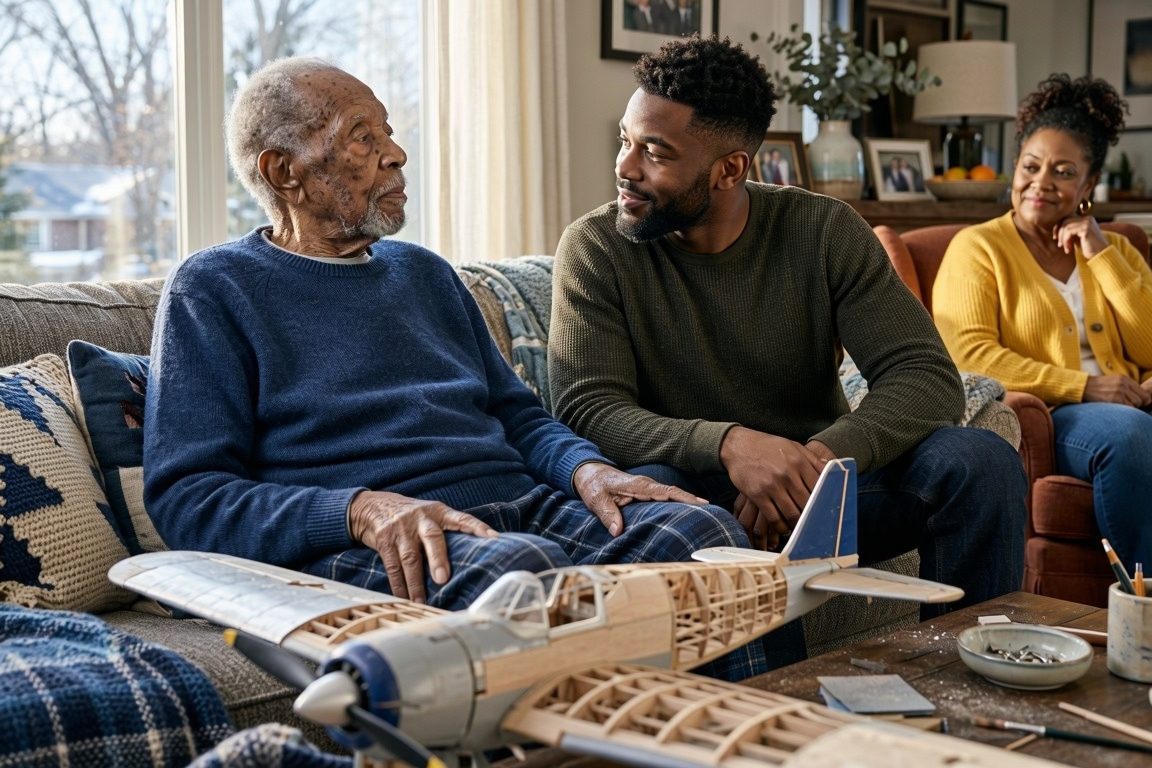
Instead of sitting face-to-face (which can feel confrontational), sit next to them while doing a quiet activity like looking out the window, listening to music, or folding laundry. This reduces pressure and makes it easier for them to open up.
The 'Memory Lane' Bridge
Use a photo album or a familiar object from their past. While looking at it, say something like, 'Remember when we used to go to the lake? I always felt so peaceful there. Do you ever feel that way now?' This connects the present feeling to a positive past memory.
The 'Check-In' Routine
Set a daily or weekly ritual where you ask one gentle, open-ended question: 'What was the best part of your day?' or 'Is there anything you'd like to talk about?' Keep it brief and consistent, and don't push for an answer.
The 'Doctor Visit' Script
If you need to bring up a medical appointment, say: 'I'm going to the doctor for a check-up next week. I'd love for you to come with me – they can check your blood pressure and make sure everything is okay. It would make me feel better.' This frames it as a shared concern, not a problem with them.
Different situations
Lewy body dementia
People with Lewy body dementia often have vivid visual hallucinations and fluctuating cognition. Depression may present as extreme anxiety or paranoia. Avoid asking about mood during a hallucination episode. Instead, validate their fear first: 'That must be scary. I'm here with you.' Then gently redirect to a calming activity. Discuss any medication changes with the doctor, as some antidepressants can worsen hallucinations.
Frontotemporal dementia (behavioral variant)
In bvFTD, the person may lose empathy and insight early on. They may not feel sad but instead become apathetic or socially inappropriate. Do not expect them to acknowledge depression. Instead, focus on engaging them in structured, enjoyable activities. Apathy can look like depression but may respond better to routine and stimulation than to talk therapy.
Spouse vs adult child caregiver
As a spouse, you have a shared history that can be a bridge. Use 'we' language: 'We've been through hard times before. We'll get through this together.' As an adult child, you may need to be more careful not to sound like you're parenting them. Use respectful, collaborative language: 'Dad, I'm worried about you. Can we figure this out together?'
Living in a facility
If your loved one lives in a care home, coordinate with staff. They may notice patterns you don't. Ask them to engage your loved one in group activities and to let you know if they seem withdrawn. When you visit, bring a concrete activity (e.g., a puzzle, a favorite snack) rather than expecting a conversation about feelings.
Late-stage dementia
In later stages, verbal conversation about depression is unlikely. Focus on non-verbal cues: changes in appetite, sleep, or facial expression. Use gentle touch, soothing music, or a familiar routine to comfort. Discuss any signs of distress with the doctor, as untreated depression can worsen pain and agitation.
For the doctor
5
- Ask your loved one's doctor if a depression screening is appropriate, even if they resist. The doctor may use a simple tool like the PHQ-9 adapted for dementia.
- Discuss whether antidepressants might help, especially if your loved one has a history of depression or if non-medication approaches are not working. Some antidepressants can interact with dementia medications.
- Inquire about a referral to a geriatric psychiatrist or a counselor who specializes in older adults and dementia. They may have techniques for engaging someone who is resistant.
- If your loved one is neglecting personal care or losing weight, ask the doctor to rule out other medical causes (e.g., infection, thyroid issues) that can mimic depression.
- Ask about support groups for your loved one (e.g., early-stage dementia groups) where they can connect with peers who understand, which can reduce isolation and depression.