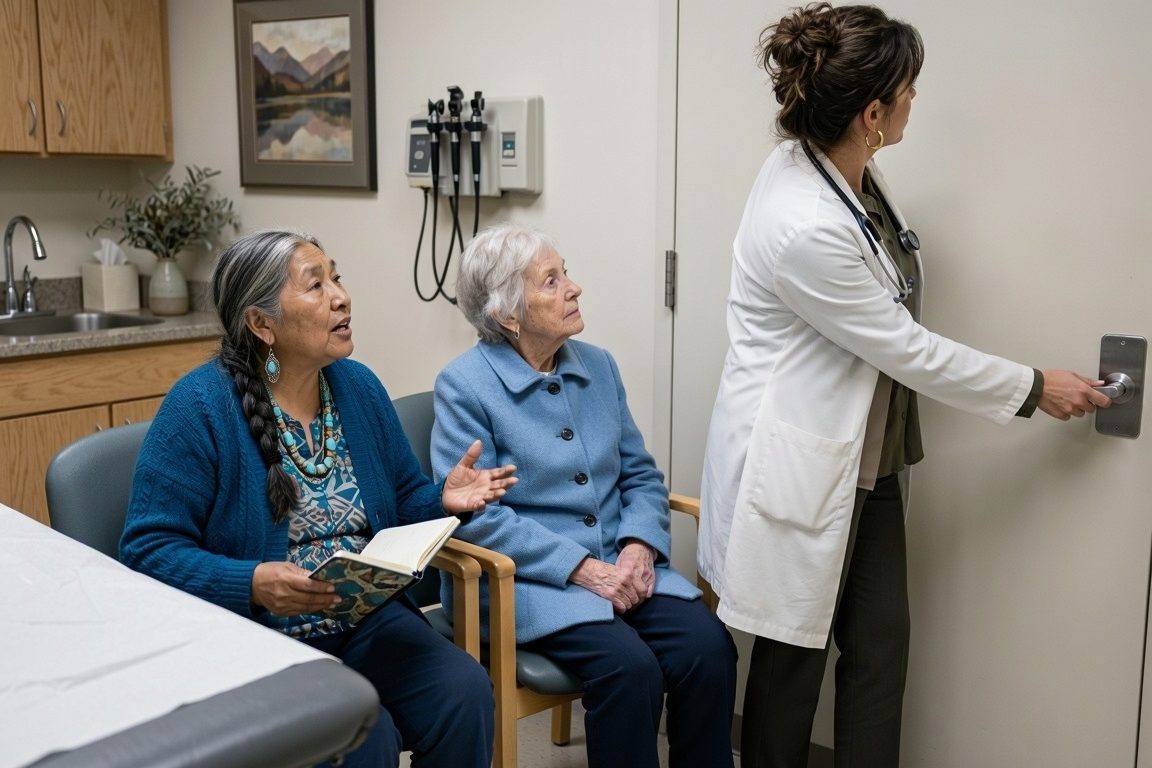
What not to do
- Apologize for asking questions or repeating yourself.
- Accept “that’s just dementia” without asking for a specific test or next step.
- Leave the room without written next steps or a follow-up plan for non-response.
- Go alone, bring a second set of ears with you.
Key points
- Medical gaslighting is real, common, and harmful, but you have tools to fight it.
- Prepare a written list of concerns and hand it to the doctor at the start of the visit.
- Use specific phrases like ‘Can you explain your reasoning?’ to force evidence-based responses.
- Request a patient advocate or second opinion if you feel dismissed.
- Document everything: appointments, decisions, and refusals.
- Your anger is a signal, use it to fuel advocacy, not to give up.
Videos
 Medical GaslightingThis video directly addresses the experience of being dismissed by medical professionals and gives you language to push back.
 The Caregiver's Journal with Lance A. Slatton & Denise M. Brown: Chapter 2 'The Path to Diagnosis'Hear real caregiver stories about fighting for a diagnosis and the importance of persistence.
 Conscious Caregiving with L & L 'Dementia & Denial'Explores how denial from providers and family can block care, and how to overcome it.
 Dementia Care Partner Talk Show Podcast Ep. 66: How to Approach the Subject of Cognitive TestsPractical tips on requesting and preparing for cognitive assessments, a key tool against gaslighting.

Background
What Medical Gaslighting Looks Like in a Dementia Appointment
You walk into the exam room with a list of concerns: your mom is more confused than last month, she’s wandering at night, she’s lost weight. The doctor barely looks up from the computer, says ‘this is normal for her age,’ and hands you a pamphlet. You leave feeling dismissed, angry, and wondering why you even bothered. That’s medical gaslighting, when a healthcare provider minimizes your observations, blames you for being anxious, or fails to take your loved one’s symptoms seriously. Seniors and their caregivers are the highest population of victims of this kind of treatment, and it’s unacceptable.
Why It Happens, and Why You Must Push Back
Doctors are overworked, rushed, and sometimes not trained in dementia-specific communication. But that doesn’t excuse blowing you off. When you feel in your gut that something is wrong, you are usually right. The problem is that many clinicians see dementia as a ‘hopeless’ condition and stop digging for treatable causes, like infections, medication side effects, or pain. If you don’t speak up, your loved one may suffer needlessly. As one expert put it, ‘don’t be intimidated by the white coat.’ You have one person to care for; they have many. That means you need to be the squeaky wheel.
The Emotional Toll on You, the Caregiver
After being gaslit, you may feel shame, self-doubt, or rage. You might think, ‘Maybe I am overreacting.’ But you are not. The anger you feel is a signal that something needs to change, and it can be a powerful fuel for advocacy. Many caregivers report that they wish they had pushed harder for a diagnosis, asked more questions about medications, or demanded a brain scan. Don’t let that be you. Your frustration is valid, and it can be channeled into concrete steps that get results.
Practical tools
3
One-Page Fact Sheet Template
Printable A4: sections for baseline, three changes (symptom, when started, frequency), medications, and one priority question. Keeps visit on track.
Symptom & Interaction Log
Daily log template (paper or app) for behaviors, falls, weight, safety events, bring last 2 weeks to all appointments to counter dismissal of ‘vague’ concerns.
Recording Notification Card
Wallet card stating: ‘I record all medical appointments for my notes. I will notify you and stop if asked.’ Use where one-party consent applies.
Different situations
Lewy body dementia (LBD) or Parkinson’s disease dementia
In LBD, symptoms like hallucinations, fluctuating cognition, and movement issues are often misdiagnosed as psychiatric problems. Be extra specific: ‘My dad sees small people or animals that aren’t there. This happens several times a day.’ Ask for a referral to a neurologist who specializes in movement disorders. Avoid antipsychotic medications unless absolutely necessary, they can be dangerous in LBD. Discuss with your clinician.
Late-stage dementia (bedbound, minimal verbal communication)
In late stages, gaslighting often takes the form of ‘they can’t feel pain’ or ‘it’s just the disease.’ Push back: ‘My mom winces when I touch her left leg. Please do a pain assessment and consider a trial of acetaminophen.’ Ask about pressure sore checks, hydration, and infection screening. Your advocacy shifts from cognitive concerns to comfort and dignity.
Spouse caregiver vs. adult child caregiver
Spouses are often dismissed as ‘overprotective’ or ‘in denial.’ Adult children may be seen as ‘interfering.’ If you’re a spouse, bring a calm, prepared list and use ‘we’ language: ‘We are concerned about these changes.’ If you’re an adult child, acknowledge your role: ‘I’m here because Mom asked me to help with medical decisions. I have her permission to speak for her.’
Caregiver is a person of color or LGBTQ+
Medical gaslighting is worse for marginalized groups. If you experience bias, document it. Say: ‘I feel my concerns are not being taken seriously because of my identity. I want that noted in the chart.’ Seek out providers who are culturally competent or part of community health centers. You can also bring a trusted advocate from a local Alzheimer’s Association chapter.
In a hospital or ER setting
Hospitals are high-stress and fast-paced. You may be told ‘we’ll handle it’ and then ignored. Stay with your loved one as much as possible. If you’re asked to leave, say: ‘I am here to provide history and advocate. I need to stay for safety.’ Ask for the charge nurse or hospitalist if you feel dismissed. Use the patient advocate immediately if needed.
For the doctor
5
- Ask your doctor: ‘Are there any reversible causes of my loved one’s symptoms that we should rule out, like a urinary tract infection, dehydration, or medication side effects?’
- Ask: ‘Would a brain MRI or CT scan be appropriate to rule out other conditions like a tumor or stroke?’
- Ask: ‘What are the risks and benefits of starting a medication like donepezil or memantine for my loved one’s stage of dementia?’
- Ask: ‘If I suspect my loved one is in pain but cannot communicate, what pain assessment tools can you use?’
- Ask: ‘How can I get a referral to a geriatric psychiatrist or neurologist for a second opinion?’