Step by step
What not to do
- Do not assume that a medication is safe just because it is over-the-counter or 'natural.' Many OTC products and supplements can cause serotonin syndrome when combined with antidepressants. Always check with a pharmacist before giving anything new.
- Do not stop or change your loved one's antidepressant dose on your own. Suddenly stopping an antidepressant can cause withdrawal symptoms or a return of depression. Any changes should be made under a doctor's guidance, with a plan for tapering if needed.
- Do not ignore physical symptoms like muscle twitching or diarrhea, thinking they are just side effects that will pass. These can be early warning signs of serotonin syndrome. If they appear along with agitation or confusion, seek medical help promptly.
- Do not give multiple medications that affect serotonin at the same time without explicit approval from the prescribing doctor. For example, if your loved one is already on an SSRI, avoid adding a migraine triptan or tramadol unless the doctor has carefully weighed the risks and benefits.
- Do not rely on memory to track medications. Use a pill organizer or a written log to ensure doses are taken correctly. Accidental double-dosing, taking both an old and new prescription of the same drug, can cause a dangerous serotonin spike.
Key points
- Serotonin syndrome is caused by too much serotonin, most often from combining two or more serotonergic medications like antidepressants, migraine drugs, opioids, or certain OTC products.
- People with dementia are at higher risk due to age-related medication sensitivity, polypharmacy, and brain changes that make them more vulnerable to chemical imbalances.
- Early signs include agitation, confusion, rapid heart rate, dilated pupils, muscle twitching, and diarrhea. These can be mistaken for dementia progression or sundowning.
- Always ask the doctor or pharmacist about potential serotonin interactions before starting any new medication, including over-the-counter and herbal products.
- Keep a complete, updated medication list and a symptom diary to help identify patterns. Use a yearly medication reconciliation appointment to review all drugs.
- If you suspect serotonin syndrome, seek emergency medical help immediately and do not give any more of the suspected new medication until a healthcare provider evaluates your loved one. Tell the ER staff about all medications your loved one takes.
Videos
 Pharmacologic Management of Neuropsychiatric Symptoms in DementiaThis video discusses how medications are used to manage agitation and other neuropsychiatric symptoms in dementia, including the risks of combining drugs. It helps caregivers understand the broader context of medication safety.
 THIS Pill Causes Dementia!!!While focused on dementia risk from certain medications, this video highlights the dangers of polypharmacy and drug interactions, which is directly relevant to understanding serotonin syndrome triggers.
 Medications Used in Dementia: What Caregivers Should Know | Sarah Mourra MD | UCLAMDChatThis talk covers common medications in dementia care, including antidepressants, and explains how they work. It provides essential background for recognizing which drugs can contribute to serotonin syndrome.
 Management of Comorbid Symptoms that Interfere with Sleep in the Older AdultThis video discusses sleep medications and their interactions, including how certain antidepressants and other drugs can cause agitation or other side effects. It helps caregivers understand the risks of combining sleep aids with serotonergic drugs.
2 more videos
 What Stage Of Dementia Is Sundowning?Sundowning can look like serotonin syndrome. This video helps caregivers distinguish between typical dementia-related agitation and a medication-induced reaction, which is crucial for knowing when to seek medical help.
 What Are Some Early Signs or Symptoms That a Person is Living with Dementia?Understanding early dementia signs helps caregivers recognize when new symptoms (like those from serotonin syndrome) are out of the ordinary and require immediate attention.
Practical tools
6
Medication Interaction Checklist
Create a simple one-page checklist that lists all of your loved one's current medications. Next to each, note the drug class (e.g., SSRI, SNRI, opioid) and any known interactions. Before starting a new medication, use this checklist to ask: 'Is this new drug serotonergic? Could it interact with any of these?' Keep a copy in your phone or wallet.
The 'Ask the Pharmacist' Script
When picking up a new prescription, say to the pharmacist: 'My loved one is on [list antidepressants]. I'm worried about serotonin syndrome. Can you check if this new medication could cause a dangerous interaction? Are there any OTC products I should avoid?' Pharmacists are experts in drug interactions and can often spot risks the doctor might miss.
Symptom Tracking Log
Use a simple notebook or a free app to track daily symptoms for the first week after any medication change. Note the date, time, and any changes in:
Bring this log to doctor appointments to help identify patterns.
Safe OTC Alternatives List
Work with the pharmacist to create a list of safe over-the-counter products for common issues like colds, pain, or nausea that do not interact with your loved one's medications. For example, for pain, acetaminophen (Tylenol) is generally safer than NSAIDs or opioids. For cough, a simple honey-based syrup may be better than one with dextromethorphan.
Emergency Information Card
Create a small card that lists
Keep this card in their wallet and give a copy to the emergency room staff if you go in.
Medication Reconciliation Appointment
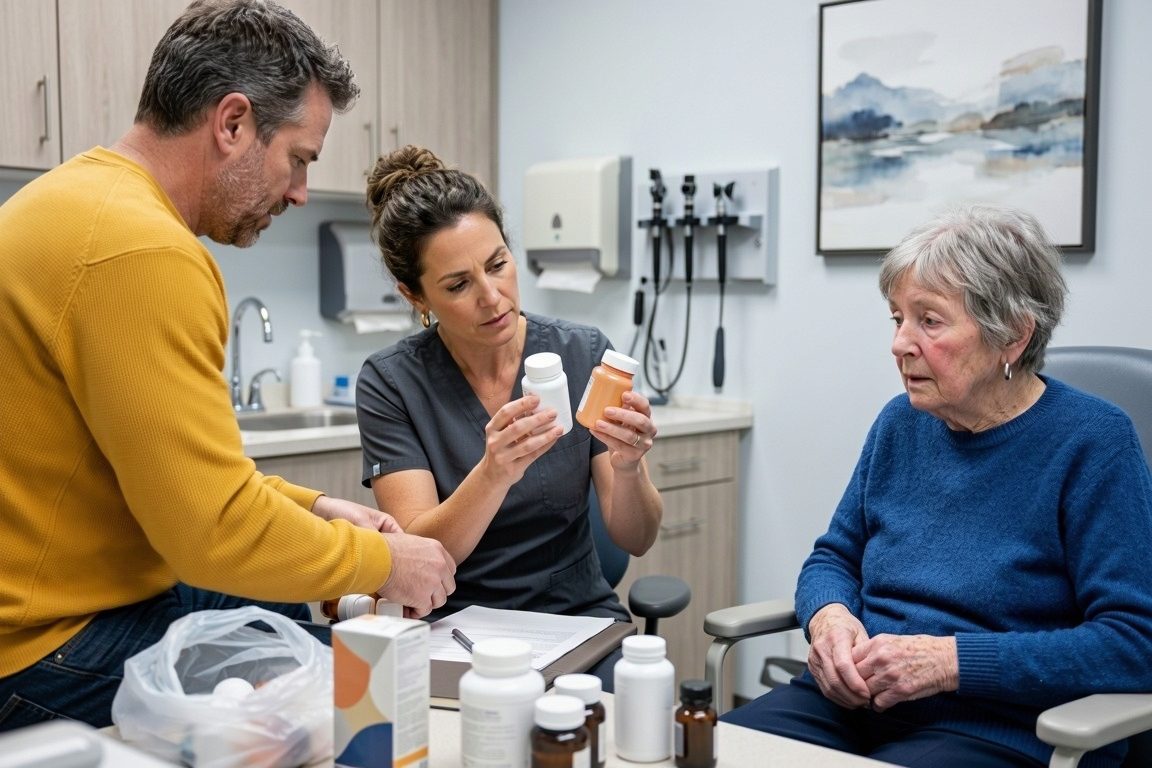
Schedule a yearly 'brown bag' appointment with the primary care doctor or a geriatric pharmacist. Bring all medications (including OTC and supplements) in a bag. The doctor will review each one for interactions, appropriateness, and whether it can be stopped or reduced. This is a powerful way to prevent serotonin syndrome and other drug problems.
Different situations
For a person with Lewy body dementia
Lewy body dementia makes the brain extremely sensitive to medications, including antidepressants. Start with even lower doses than usual, and watch very closely for any sign of serotonin syndrome. Also, avoid anti-nausea medications like metoclopramide (Reglan) because they can worsen Parkinsonism symptoms. Discuss with the doctor whether a non-serotonergic antidepressant might be safer.
In late-stage dementia
In late stages, the person may not be able to communicate symptoms like headache or nausea. Rely more on physical signs: look for muscle twitching, rapid pulse, fever, or sudden agitation. Also, because swallowing may be difficult, liquid or dissolvable medications might be used, but these can still cause interactions. Keep the medication list updated and share it with hospice or palliative care team if involved.
For a spouse caregiver vs. an adult child
Spouse caregivers may feel more confident managing medications but might be less likely to question the doctor. Adult children may need to be more assertive in asking about interactions. Both should remember that it is okay to ask for a second opinion or a pharmacist consult. If you are an adult child living far away, set up a shared online document with the medication list so you can both see it.
In a facility (nursing home or assisted living)
Facility staff manage medications, but you still need to be vigilant. Ask the nurse or doctor for a copy of the medication administration record (MAR) and review it for any new drugs. Request that the facility's pharmacist do a drug interaction check whenever a new medication is started. If you notice agitation after a new drug, ask for a 'medication hold' and a re-evaluation.
For someone on Medicaid or with limited access to specialists
If you cannot see a geriatrician, ask the primary care doctor for a referral to a pharmacist-led medication therapy management (MTM) program. Many state Medicaid programs offer this for free. You can also call the pharmacy and ask for a 'drug interaction review' over the phone. Keep a printed list of medications in your car in case of an emergency room visit.
For the doctor
7
- Ask the doctor: 'Could my loved one's antidepressant be safely switched to a non-serotonergic option to reduce the risk of serotonin syndrome?'
- If your loved one needs pain management, ask: 'Is there a safer alternative to tramadol or other opioids that won't interact with their antidepressant?'
- For nausea or vomiting, ask: 'Which anti-nausea medication is safest for someone on an SSRI? Should we avoid ondansetron or metoclopramide?'
- If your loved one takes an antibiotic, ask: 'Is linezolid (Zyvox) being considered? It can cause serotonin syndrome with antidepressants. Is there another antibiotic we can use?'
- Ask the pharmacist: 'Can you run a full drug interaction check on my loved one's current medication list and flag any serotonergic combinations?'
- If your loved one uses any herbal supplements, ask: 'Are St. John's wort, ginseng, or nutmeg safe to take with their current medications, or should we stop them?'
- Ask the doctor: 'If I suspect serotonin syndrome, what is the safest way to handle the suspected medication? Should I stop it immediately or wait for your guidance?'