
Step by step
What not to do
- Do NOT argue or present evidence. Even if you show them test results, doctor's notes, or family testimony, they will not believe it. Arguing only makes them more frustrated and may make you a target of their anger or suspicion.
- Do NOT try to persuade them using logic or facts. Persuasion requires the ability to rationalize and process proof, functions their damaged brain cannot perform. You will only strengthen their resistance and push them further away.
- Do NOT correct them in front of others. This erodes their dignity and can cause deep shame or anger. If you need to discuss their condition, do it privately with a care partner or professional, never in their presence.
- Do NOT take away objects or privileges without explanation. For example, if they can no longer drive, don't just hide the keys.Instead, say something like, 'The car is in the shop today. Let's take a walk instead.' This avoids a power struggle and maintains their sense of autonomy.
- Do NOT assume they are being stubborn or difficult. Anosognosia is not a choice. Remind yourself that they genuinely believe they are fine. Your frustration is valid, but it's not their fault.
Key points
- Anosognosia is a brain-based lack of awareness, not denial or stubbornness. Your loved one genuinely cannot see their deficits.
- Trying to convince them with facts or evidence will backfire, it strengthens their resistance and damages trust.
- Shift your goal from 'being right' to 'getting results' by using validation, redirection, and therapeutic fibs.
- Always ask permission before helping. Without it, care becomes coercion.
- Use 'we' language and shared activities to reduce resistance and build cooperation.
- If they refuse, drop it and try again later with a different approach. Persistence in the moment escalates conflict.
- Seek support for yourself, caregiving for someone with anosognosia is emotionally draining, and you need a place to 'dump the grief.'
Videos
 Why your loved one doesn't believe they have dementia- It's NOT denial.This video clearly explains the difference between anosognosia and denial, and why trying to convince is futile.
 Jill Couch DAWN Dementia SpecialistJill Couch offers practical, compassionate strategies for communicating with someone who has anosognosia.
 DENIAL AND DEMENTIAThis video explores the difference between denial (a psychological response) and anosognosia (a neurological symptom), helping caregivers adjust their approach.
 Why Your Loved One Doesn't Believe They Have Dementia - It's NOT DenialAnother excellent resource that reinforces the key message: don't argue, don't convince, use validation and redirection.
2 more videos
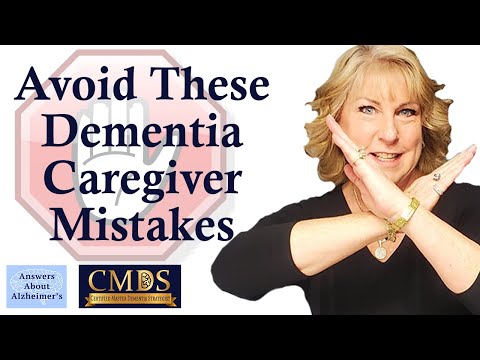 Don't Make This Dementia Caregiving MistakeThis video highlights common caregiver mistakes (like arguing or correcting) and offers better alternatives.
 Dementia and Delusions: Why do delusions happen and how should you respond?Delusions often accompany anosognosia. This video explains how to respond without arguing or feeding the delusion.
Background
What Anosognosia Really Is (and Isn't)
Anosognosia literally means 'without knowledge of disease.' It's a neurological symptom caused by damage to the parts of the brain responsible for self-awareness, particularly the frontal and parietal lobes. In Alzheimer's and other dementias, these areas deteriorate, making it impossible for the person to recognize their own cognitive decline. This is not denial, denial is a psychological defense mechanism where a cognitively intact person chooses to avoid painful information. Anosognosia means the brain literally cannot make the connection that something is wrong. Your loved one is not being stubborn, lying, or refusing to accept reality; they genuinely believe they are fine, even when symptoms are obvious to everyone else.
Why Trying to Convince Backfires
When you present evidence, test results, forgotten appointments, mistakes, you are asking a damaged brain to process logical information and change its belief. But the brain areas needed for rationalization, insight, and accepting proof are no longer functioning properly. Instead of convincing them, you strengthen their resistance. They may argue more, become angry, or even see you as a threat or suspect in their delusions. The harder you push, the more they dig in. As one expert put it, 'We can try to be right, or we can try to get results.' Trying to convince is a losing battle that erodes trust and escalates conflict.
The Goal: Permission, Not Persuasion
Because you cannot fix anosognosia, the goal shifts to creating a care plan that works with it. This means you must get the person's permission for every task, or it becomes a form of coercion. You cannot force help; you must invite cooperation. This requires a complete mindset shift from adversarial ('I need to make them see') to supportive ('How can I help them feel safe and willing?'). It also means accepting that you won't get the care plan you originally wanted, you'll need to compromise in a way that causes the least harm and most benefit.
Practical tools
6
The 'Yes, and...' Script
A simple phrase to validate without agreeing: 'I hear you. I know you feel fine. And I also want to make sure we're both safe. Can we try this together?' This acknowledges their reality while gently introducing your concern.
The Redirection Checklist
Keep a mental or written list of 3-5 neutral topics your loved one enjoys: a favorite hobby, a past vacation, a pet, a meal they love. When they become upset or argumentative, immediately pivot to one of these topics. For example: 'I know you don't think you need help, but did you see the birds at the feeder this morning? They were so colorful.'
The 'Let's Do It Together' Approach
For tasks like bathing, dressing, or eating, frame it as a shared activity. Say, 'I'm going to wash my face now. Would you like to join me?' or 'Let's both take our vitamins.' This reduces the feeling of being controlled and increases cooperation.
The Therapeutic Fib Toolkit
Have a few pre-planned 'white lies' ready for common refusals. For medication: 'The doctor said this is a new vitamin that helps with energy.' For bathing: 'The water feels so nice today, let me show you.' For doctor visits: 'We're going for a drive to see the flowers, and we'll stop by the clinic on the way.'
The Permission Script
Before any task, ask: 'Would you be willing to...?' or 'Can I help you with...?' If they say no, accept it and try again later. This respects their autonomy and reduces power struggles.
The 'Care Partner Support Series' Mindset
Shift from adversarial to curious. Instead of thinking, 'How do I make them do this?' ask yourself, 'What is their brain experiencing right now? What do they need to feel safe?' This curiosity helps you find creative, compassionate solutions.
Different situations
Lewy body dementia or Parkinson's dementia
Anosognosia may fluctuate more in these conditions. The person might have moments of clarity where they recognize their deficits, followed by periods of complete unawareness. During clear moments, you can have brief, gentle conversations about safety, but never push. Use the same validation and redirection techniques during unaware periods.
Late-stage dementia
In later stages, the person may be less verbal and less able to engage in conversation. Focus on non-verbal cues: gentle touch, calm tone of voice, and simple, one-step instructions. Use demonstration and physical guidance more than words. The goal is comfort and safety, not cooperation.
Spouse vs. adult child caregiver
Spouses often have a longer history of shared decision-making, which can make the shift to a supportive role harder. Adult children may need to navigate guilt and a reversal of roles. Both should seek support groups to process these feelings. The techniques remain the same, but the emotional work differs.
Person is in a facility or receiving in-home care
If professional caregivers are involved, ensure they understand anosognosia and use the same validation and redirection techniques. You may need to advocate for your loved one, asking staff to avoid arguing or correcting. If you are the primary caregiver, you can model these techniques for others.
Person has a history of mental illness (e.g., bipolar, schizophrenia)
Anosognosia can co-occur with psychiatric conditions. In these cases, it's even more important to avoid confrontation and focus on safety. Work closely with a psychiatrist or neurologist who understands both conditions. Medication adherence may require creative approaches, like using pill organizers or asking the doctor to prescribe long-acting formulations.
For the doctor
4
- Ask your doctor: 'Given my loved one's anosognosia, are there any medications or therapies that might help improve their awareness or reduce agitation?'
- Ask your doctor: 'How can we safely manage driving, cooking, or finances when they don't believe they need help? Are there legal steps we should take?'
- Ask your doctor: 'Are there any local support groups or dementia care specialists who can help me learn more techniques for responding to anosognosia?'
- Ask your doctor: 'If my loved one refuses medical care or treatment, what are our options? When is it appropriate to seek a guardianship or conservatorship?'