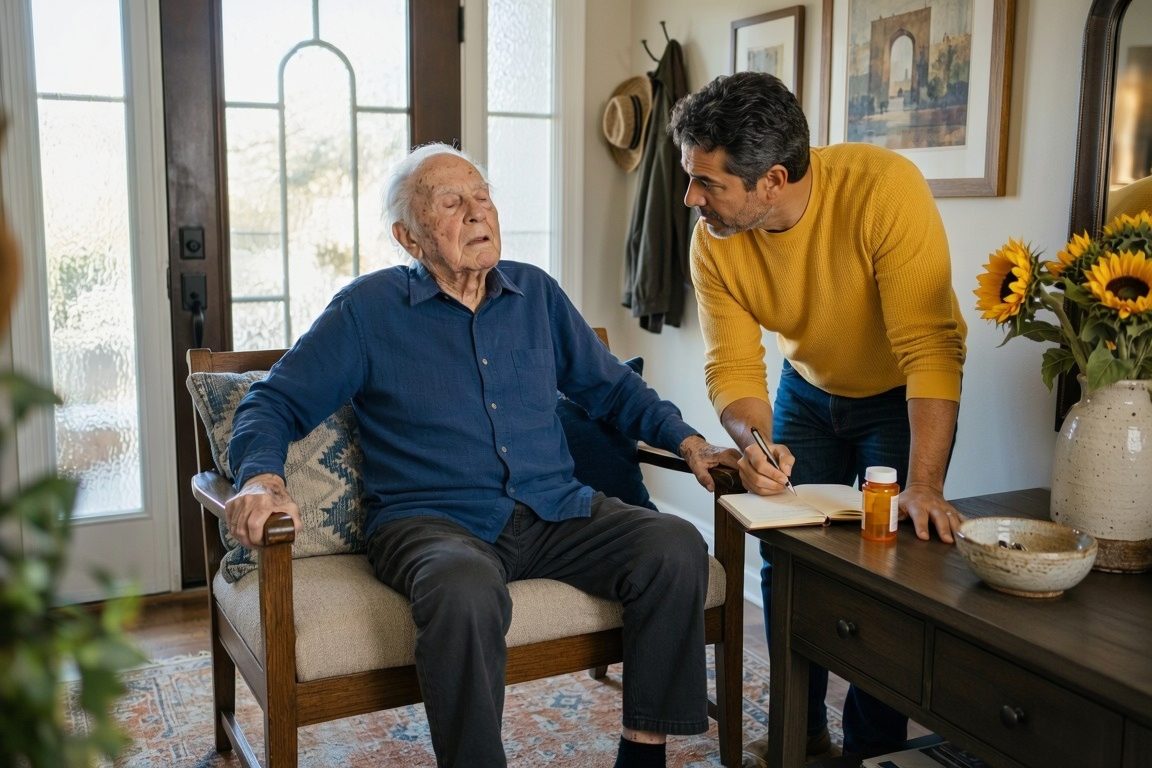
Step by step
What not to do
- Do not assume sedation is harmless. Many caregivers think sleepiness is a good thing, but excessive sedation increases fall risk and can worsen confusion. If your loved one is sleeping more than usual or seems groggy during the day, report it to the doctor.
- Do not give quetiapine with grapefruit juice or alcohol. Grapefruit juice can increase the level of quetiapine in the blood, raising the risk of side effects. Alcohol can amplify sedation and dizziness. Avoid both completely while your loved one is on this medication.
- Do not combine quetiapine with other anticholinergic drugs. Common anticholinergic medications include diphenhydramine (Benadryl), oxybutynin (Ditropan), and some antidepressants like paroxetine (Paxil). Combining them increases the risk of confusion, falls, and urinary retention. Review all medications (including over-the-counter and herbal supplements) with the pharmacist or doctor.
- Do not ignore falls or near-falls. Even if your loved one says they are fine, a fall can lead to a hip fracture or head injury. Document every fall and discuss it with the doctor. The doctor may need to adjust the dose or switch medications.
- Do not use quetiapine for insomnia without a thorough discussion. The Iowa Geriatric Education Center strongly advises against using quetiapine for sleep in older adults because safer alternatives exist (e.g., melatonin, sleep hygiene, cognitive behavioral therapy). If the doctor suggests it for sleep, ask why and whether non-drug options have been tried first.
- Do not assume that low doses are safe. Even low-dose quetiapine (e.g., 25 mg) can cause significant side effects in older adults, especially those with dementia or Parkinsonism. A 2025 study in Drugs & Aging found that low-dose quetiapine for insomnia still carries risks of falls, cognitive impairment, and metabolic changes. Always monitor closely regardless of dose.
Key points
- Quetiapine carries serious risks for older adults, including falls, confusion, orthostatic hypotension, and metabolic changes, even at low doses.
- Always monitor for orthostatic hypotension by checking blood pressure lying and standing; a drop of 20 mmHg systolic is a red flag.
- Watch for anticholinergic effects (dry mouth, constipation, blurred vision) and extrapyramidal symptoms (stiffness, tremor, restlessness). Report these immediately.
- Do not use quetiapine for insomnia without first trying safer non-drug approaches (sleep hygiene, melatonin, cognitive behavioral therapy).
- Never stop quetiapine abruptly; work with the doctor to taper slowly to avoid withdrawal symptoms.
- Keep a daily symptom log and bring it to every doctor visit. You are the most important monitor of side effects.
Videos
 Deprescribing Antipsychotics in Older AdultsThis video explains the process of safely reducing or stopping antipsychotics like quetiapine, which is crucial if side effects become problematic.
 Medications that can be dangerous for dementiaCovers a range of high-risk medications for dementia, including quetiapine, and why they should be used with caution.
 Medications Used in Dementia: What Caregivers Should Know | Sarah Mourra MD | UCLAMDChatProvides an overview of dementia medications, including antipsychotics, and what caregivers should watch for.
 Allergy Help for SeniorsDiscusses anticholinergic risks in older adults, which is relevant because quetiapine has strong anticholinergic effects.

Background
Why Quetiapine Is Risky in Older Adults
Quetiapine belongs to a class of drugs called second-generation antipsychotics. While it can be helpful for approved conditions like schizophrenia or bipolar disorder, it is frequently used off-label in older adults for insomnia, anxiety, or agitation. However, the body changes with age: older adults absorb and eliminate medications more slowly, leading to drug accumulation and a higher risk of side effects even at low doses. The Iowa Geriatric Education Center notes that at low doses, quetiapine acts much like an antihistamine (similar to Benadryl), which is considered a high-risk medication for older adults because of its strong anticholinergic effects, causing confusion, constipation, dry mouth, and urinary retention. These effects can worsen dementia symptoms and increase fall risk.
The Most Common and Serious Side Effects
The most common side effects include sedation, dizziness, and dry mouth, but the more dangerous ones require immediate attention. According to the Mayo Clinic, you should watch for chills, cold sweats, confusion, and dizziness or lightheadedness when standing up (orthostatic hypotension). This drop in blood pressure can cause falls, which are especially dangerous for older adults. The AAFP lists additional adverse effects: anticholinergic effects (blurred vision, confusion, constipation, dry mouth, urinary retention), extrapyramidal symptoms (muscle spasms, stiffness, tremor, restlessness), hyperprolactinemia (acne, breast enlargement, reduced bone density), neuroleptic malignant syndrome (autonomic instability, fever, muscle rigidity), and prolonged QT interval (heart rhythm problems). In people with Lewy body dementia or Parkinsonism, these side effects can be even more severe, quetiapine is considered the safest antipsychotic for this group, but it still carries risks.
Why Falls and Cognitive Decline Are Major Concerns
Falls are a leading cause of injury in older adults, and quetiapine increases fall risk through sedation, orthostatic hypotension, and muscle stiffness. The Iowa Geriatric Education Center emphasizes that quetiapine, like other high-risk medications, should be avoided for insomnia because the risks of falls and cognitive impairment outweigh the benefits. Additionally, a systematic review in the Journal of Clinical Pharmacy and Therapeutics found that quetiapine in older adults is associated with an increased rate of falls and injury, though it may cause fewer metabolic disorders than olanzapine. For caregivers, this means every time your loved one stands up, you need to be vigilant, especially in the first few weeks of treatment or after a dose change.
The High Dropout Rate and Why It Matters
An open-label study on antipsychotics in late-life depression found that two-thirds of patients stopped taking quetiapine due to side effects, most commonly sedation and dry mouth. This high dropout rate tells us that many older adults find the side effects intolerable. If your loved one is struggling, do not assume they are being ‘difficult.’ They may be experiencing real discomfort. Always report any new symptoms to the prescriber and ask if a lower dose or a different medication might be better. Remember, non-drug approaches (like calming routines, music, or gentle activity) are often safer first-line strategies for agitation or sleep problems.
Practical tools
6
Daily Symptom Log Template
Create a simple chart with columns for Date, Time, Dose, Side Effect Observed (e.g., dizziness, confusion, fall), and Action Taken. Use this to track patterns and share with the doctor. Example: '10/15, 8 AM, 25 mg, dizzy when standing, sat down immediately, called doctor.'
Home Blood Pressure Monitor
Purchase an automatic upper-arm cuff monitor. Measure blood pressure lying down and within 1 minute of standing. Record both numbers. A drop of 20 mmHg systolic or 10 mmHg diastolic is a red flag for orthostatic hypotension.
Fall Prevention Checklist
Post this near the bed:
Review weekly.
Medication Review Appointment Card
Schedule a 'brown bag' medication review with the pharmacist or primary care provider every 3 months. Bring all prescription, over-the-counter, and herbal supplements in a bag. Ask specifically: '
'
Communication Script for Doctor Visits
Say: 'Since starting quetiapine, I have noticed [specific symptom]. I am worried about [fall risk/confusion/weight gain]. Can we review the dose? Are there non-drug options we can try first?' This keeps the conversation focused and collaborative.
Emergency Card for NMS
Write on a card: 'If fever, severe stiffness, confusion, or irregular pulse occur, call 911. Possible neuroleptic malignant syndrome. Patient is on quetiapine.' Keep this in your wallet and on the refrigerator.
Different situations
Lewy body dementia or Parkinsonism
These individuals are extremely sensitive to antipsychotics. Even low doses can cause severe parkinsonism (stiffness, tremor, shuffling gait) or worsen confusion. Quetiapine is considered the safest choice, but you must watch for any increase in motor symptoms. If you see new stiffness or a mask-like face, call the doctor immediately. Non-drug approaches (like calming music, gentle touch, or a quiet environment) should be tried first for agitation.
Late-stage dementia (bedbound or very frail)
Fall risk is still present even if the person cannot walk, they may try to get out of bed and fall. Use bed alarms or low beds. Sedation can lead to aspiration pneumonia if they sleep too deeply. Monitor for choking or gurgling sounds during sleep. Discuss with the hospice team if the goal is comfort; quetiapine may still be used for severe agitation, but the dose should be the lowest possible.
Spouse caregiver vs. adult child caregiver
Spouse caregivers may be more reluctant to report side effects because they fear losing the medication that helps with agitation. Adult children may feel more empowered to question the doctor. Whichever role you are in, remember: you are the expert on your loved one’s daily life. If you see a change, speak up. Use the communication script above to frame your concerns as observations, not accusations.
In a facility (nursing home or assisted living)
Facility staff may be quick to request quetiapine for behavioral management. Ask for a written care plan that includes non-drug interventions (e.g., redirection, preferred activities, quiet time) before medication is started. If quetiapine is prescribed, request that the facility monitor and document orthostatic blood pressure, fall incidents, and any new confusion. You have the right to request a dose reduction or a trial off the medication every 3-6 months.
Medicaid or limited resources
Quetiapine is available as a generic (Seroquel XR is more expensive). Ask the doctor to prescribe the immediate-release generic to save money. If cost is a barrier, the manufacturer’s patient assistance program may help. Also, consider that non-drug approaches (like a consistent daily routine, music therapy, or a simple exercise program) are often free or low-cost and may reduce the need for medication.
For the doctor
6
- Ask the doctor: 'Is quetiapine the safest option for my loved one given their specific dementia type and other health conditions? What is the target symptom, and how will we know if it is working?'
- Ask: 'What is the plan for monitoring side effects? How often should we check blood pressure, blood sugar, and cholesterol?'
- Ask: 'If my loved one experiences dizziness or falls, should I stop the medication immediately or call you first?'
- Ask: 'Are there any drug interactions with their current medications (including over-the-counter and herbal supplements)?'
- Ask: 'What is the lowest dose that might be effective, and how quickly will we increase it?'
- Ask: 'If side effects occur, what are the alternatives? Can we try a non-drug approach first?'