Step by step
What not to do
- Do not argue or try to reason with your loved one about why their action is unsafe; their brain cannot process logic in that moment, and confrontation escalates agitation.
- Do not leave your loved one unsupervised in new or unfamiliar environments, as disorientation raises the risk of wandering or falls.
- Do not install locks, slide bolts, or barriers that could trap them inside during a fire or emergency; maintain a clear escape route and reassess restrictive measures with a professional.
- Do not hide safety measures in a deceptive way; involve your loved one when possible, e.g., 'I'm putting these grab bars in to help us both feel steadier in the shower.'
- Do not ignore your own stress or burnout; caregiver exhaustion erodes patience and safety. Accept help and schedule regular breaks.
Key points
- Dementia-related judgment loss makes everyday situations dangerous because the brain can no longer recognize risk. This is not intentional behavior.
- Falls, wandering, and fire hazards are the top three safety risks. Nearly half of older adults with dementia experience a fall.
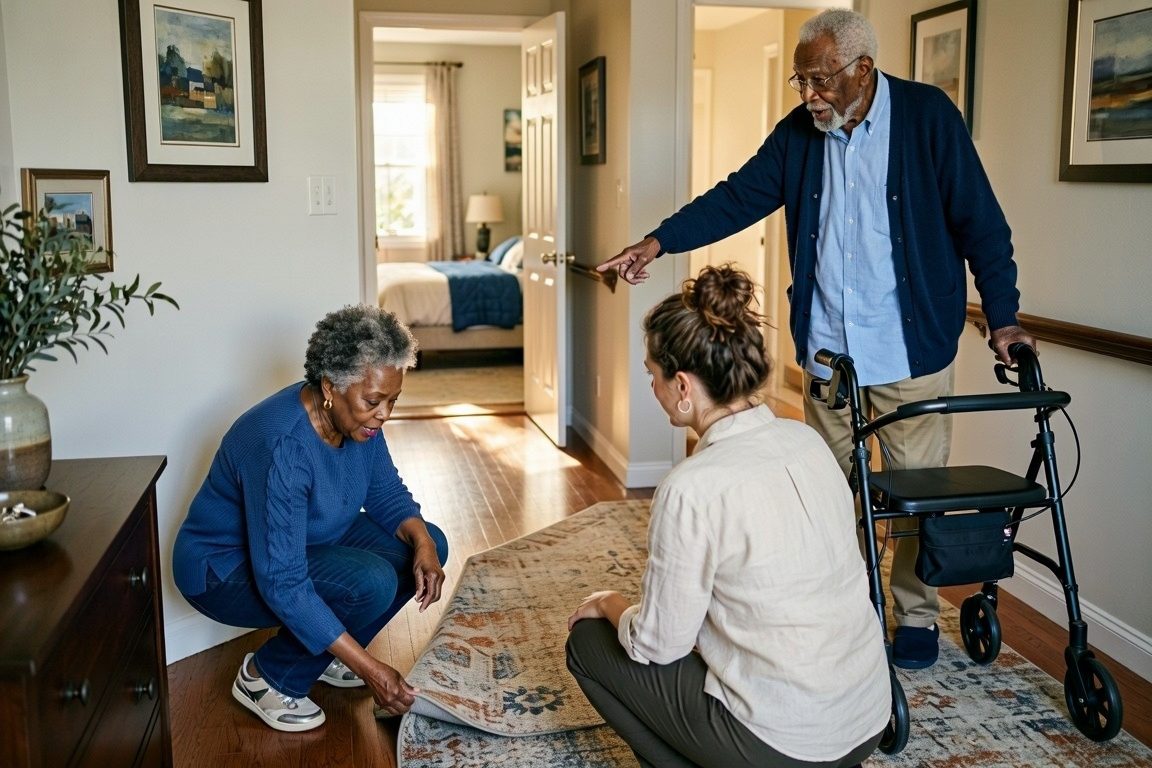
- Proactive planning is essential: install door alarms, remove tripping hazards, lock up medications and dangerous items, and create a predictable daily routine.
- Use redirection instead of arguing. Phrases like 'Let's do this together' can prevent confrontations and keep your loved one safe.
- Seek professional support: a home safety evaluation from a therapist, a MedicAlert+Safe Return program, and respite care for yourself.
- Safety must come first, but you can still involve your loved one in decisions and respect their dignity through gentle redirection and creative solutions.
Background
Why Judgment Loss Creates Safety Risks
Dementia doesn't just affect memory; it gradually erodes a person's ability to recognize and respond to danger. Imagine living in a world where your brain no longer tells you that a hot stove is dangerous or that walking outside alone at night could be unsafe. This is what happens when judgment declines. The person may not understand that a loose rug is a tripping hazard, that leaving a pot on the stove unattended could start a fire, or that wandering away from home puts them at risk. As one source explains, 'their risk of accidents and injuries increases, making safety measures essential for their well-being.' This isn't stubbornness or carelessness; it's the brain's inability to process risk.
Common Dangerous Situations to Watch For
Falls are a leading concern. Nearly half of older adults with dementia experience a fall, compared to about 30% of their peers without dementia, according to research published in the journal Alzheimer's & Dementia. This happens because dementia can impair balance, weaken muscles, and affect vision. Wandering is another serious risk. The Alzheimer's Association states that everyone with Alzheimer's or related dementia is at risk for wandering, and it can happen at any stage, even if they've never done it before. Wandering can occur on foot, in a vehicle, or even in a wheelchair. Fire safety is also critical, as forgetting to turn off appliances or leaving flammable items near heat sources becomes more common. Behavioral symptoms like agitation or anxiety can also lead to impulsive actions that put the person or others in harm's way.
The Shift from Independence to Safety-First
There comes a point when what your loved one wants may no longer be a safe option. As one dementia expert puts it, 'When we are dealing with a person with impaired judgment, when they are making poor choices, when they are doing things that bring up safety concerns, this person has no more choices. Those days are long gone. Safety must come first, period.' This doesn't mean you stop including them or trying to make them feel involved. It means you take the lead on safety decisions, using gentle redirection and creative solutions to keep them safe while preserving their sense of dignity. The goal is to prevent dangerous situations before they happen, not just react after an accident.
Practical tools
6
The 'Let's Do This Together' Redirection Phrase
A go-to script for unsafe behavior, e.g., 'I could really use your help folding these towels' or 'I was just about to make tea. Would you like to join me?' to shift focus without confrontation.
Door and Window Alarms
Battery-powered chimes or sensors that alert when an exit is opened; available under $20 at hardware stores, easy to install without permanent changes.
Stove Knob Covers or Stove Lock
Clear plastic covers over stove knobs or a locking mechanism for the oven, requiring deliberate two-step action to operate, reducing risk of unattended burner.
Timed Medication Dispenser
Lockable pillbox that unlocks only at preset times, preventing accidental double-dosing or missed doses, especially helpful when short-term memory is affected.
MedicAlert+Safe Return Program
ID bracelet and 24-hour emergency response line run by the Alzheimer's Association to reunite wandering individuals with families, often within minutes.
Pre-packed Emergency Go-Bag
Small bag by the front door with
ready to grab for quick departure.
Different situations
Lewy body dementia (LBD)
In LBD, judgment loss can be more unpredictable due to fluctuating cognition and visual hallucinations. Safety planning must account for sudden changes in awareness. Avoid using complex locks or alarms that might confuse the person during a hallucination episode. Focus on calming environments and use redirection that validates their experience: 'I see you're worried about something. Let's sit down and talk about it.' Also, falls risk is higher due to Parkinsonism symptoms, so prioritize fall-proofing the home.
Late-stage dementia
In late stages, the focus shifts to comfort and quality of life. The person may be bed-bound or have limited mobility, so wandering is less of a concern. Instead, prioritize pressure relief mattresses, bed rails (if safe and approved by a clinician), and fall prevention from bed. Use gentle music or sensory stimulation to reduce agitation. The goal is creating a peaceful environment with familiar routines, as behaviors are the result of brain damage, not intentional actions.
Spouse vs. adult child caregiver
Spouses often struggle more with role reversal and may feel they are 'taking over' their partner's autonomy. It can help to frame safety measures as 'for us both' rather than 'for you.' Adult children may need to navigate guilt about limiting a parent's freedom. In both cases, involve the person with dementia in decisions when possible, using phrases like 'I want to make sure we're both safe so we can enjoy our time together.' Seek support groups specific to your relationship role.
Living in a facility (assisted living or memory care)
Even in a facility, judgment loss can create risks. Work with staff to ensure the room is safe: remove tripping hazards, secure personal items, and ensure the bed is at a safe height. Ask about the facility's wandering prevention system (e.g., door alarms, enclosed courtyards). Advocate for your loved one's routine to be maintained. If sundowning occurs, request that staff use calming redirection rather than medication. Also, ensure the facility has a plan for locating residents who wander.
Medicaid or limited budget
Many safety measures are low-cost or free. Door alarms can be replaced with a simple bell hung on the door handle. Grab bars can be installed by a handy family member or through local senior services programs. Contact your Area Agency on Aging for free home safety evaluations and possible funding for modifications. Use a simple whiteboard instead of expensive digital calendars. Prioritize the most critical hazards (falls, wandering, fire) first.
For the doctor
7
- Ask your clinician about a formal driving evaluation to assess your loved one's ability to drive safely. Do not rely on your own judgment alone.
- Discuss medication management options, such as using a timed lockbox or pharmacy-blistered packs, to prevent accidental double-dosing or missed doses.
- Inquire about a referral to a physical or occupational therapist for a professional home safety evaluation. They can recommend specific adaptive equipment and strategies.
- If your loved one shows signs of agitation or aggression that could lead to unsafe situations, ask your clinician about non-pharmacological approaches and when medication might be considered.
- Discuss the use of a Medical Order for Life-Sustaining Treatment (MOLST) form to document end-of-life care preferences, especially in late-stage dementia.
- Ask your doctor: 'How can I safely manage wandering risks at home without creating a fire hazard or trapping my loved one?' They can help you balance safety with emergency egress.
- Ask your doctor: 'What are the signs that my loved one should stop driving, and how do I handle it if they resist?' They can guide you on a formal evaluation and alternative transportation.