Step by step
What not to do
- Do not rush to medicate without trying non-drug strategies first. Many facilities default to medication because it is quick, but this can lead to over-sedation, falls, and worsening cognition.Instead, ask the team to document what non-drug approaches were tried and for how long before considering a prescription.
- Do not use benzodiazepines (like Ativan, Valium, Xanax) for nighttime agitation. These drugs can cause paradoxical agitation (making the person more upset), increase fall risk, and worsen confusion. They are generally contraindicated in dementia. If the doctor suggests one, ask about safer alternatives like low-dose trazodone or an atypical antipsychotic.
- Do not give large doses of sedating medications at bedtime. This can lead to daytime drowsiness, which then disrupts the sleep-wake cycle further, creating a vicious cycle. Ask the doctor if splitting the dose or using the lowest effective dose is appropriate for your loved one.
- Do not ignore the possibility of pain or discomfort. People with dementia often cannot tell you they are in pain. Look for non-verbal signs: grimacing, guarding a body part, moaning, or restlessness. Treating pain (with acetaminophen, for example) can eliminate the agitation entirely.
- Do not argue with or restrain the person during an episode. This will escalate the agitation.Instead, use the 'go along to get along' approach: agree with their reality, validate their feelings, and gently redirect. For example, if they say they need to go home, say, 'Let's get your coat and we'll go in the morning. First, let's have a snack.'
- Do not stop a medication abruptly without medical supervision. Some psychotropics can cause withdrawal symptoms or a rebound of agitation. Always work with the doctor to taper off slowly.
Key points
- Nighttime agitation is a symptom of distress, not willful behavior, always look for unmet needs first (pain, hunger, fear, infection).
- Non-drug approaches (DICE, light therapy, calming routines, redirection) should be tried first and documented before any medication is considered.
- Antipsychotics carry serious risks (stroke, death, falls, cognitive decline) and should be used only for severe agitation that does not respond to other measures, at the lowest dose and shortest duration.
- Benzodiazepines are generally not recommended for dementia-related agitation due to paradoxical effects and fall risk.
- You, as a family member, are a vital advocate, ask questions, share what you know about your loved one, and push for a cautious, stepwise approach.
- Deprescribing should be planned from the start, once the crisis is controlled, work with the doctor to taper off the medication.
Videos
 Agitation and Alzheimer’s: Strategies for Managing Behavioral and Psychological Symptoms of DementiaThis video offers a comprehensive overview of non-drug strategies for agitation, which is the foundation of care before considering medications.
 Managing Sleep & Sundowning in Dementia CareDirectly addresses nighttime agitation and provides practical sleep hygiene tips that can reduce the need for psychotropic drugs.
 Top 11 Things to Know about Alzheimer’s Disease PsychosisExplains when psychosis (hallucinations, delusions) is driving agitation and when antipsychotics may be appropriate, helping you understand the clinical reasoning.
 Management of Agitation in DementiaA clinical overview that balances non-drug and medication approaches, useful for discussing with the care team.
2 more videos


Background
Why Nighttime Agitation Happens in Dementia
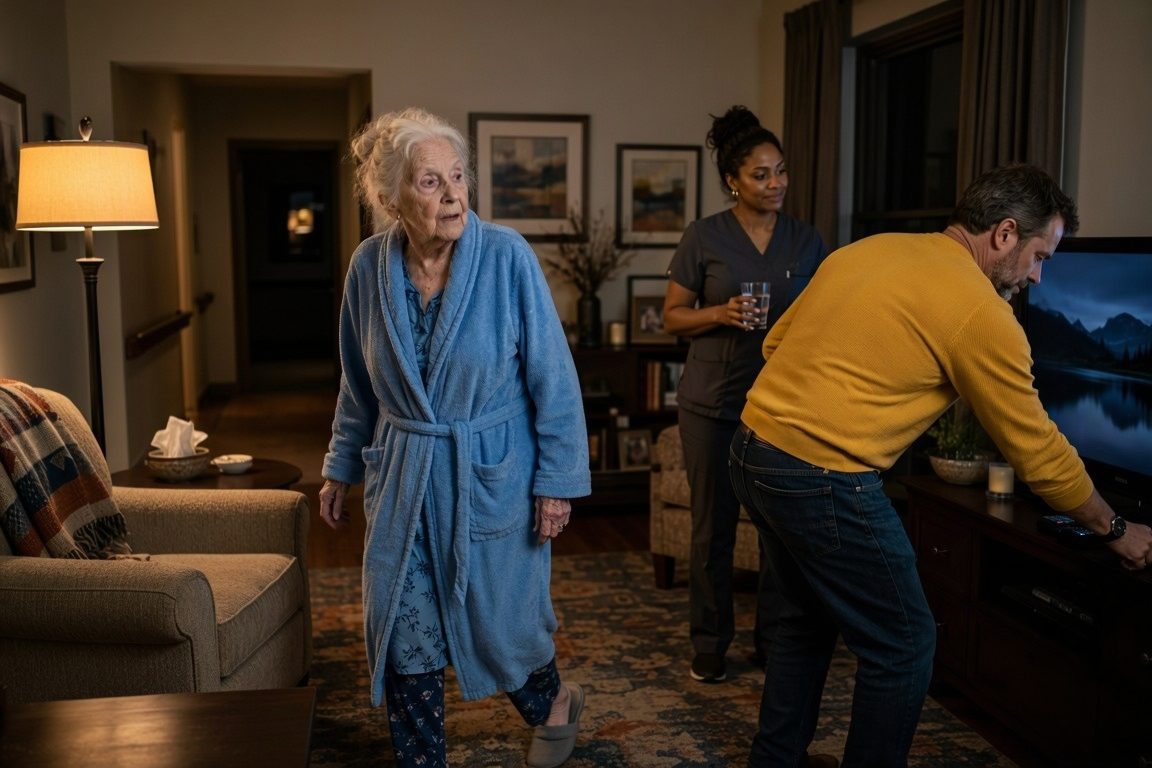
Nighttime agitation, often called sundowning, is not a sign that your loved one is 'bad' or that staff are failing. It is a common symptom of dementia, especially in middle to later stages, caused by changes in the brain's internal clock, fatigue, and an overload of sensory input from the day. The person may feel confused, frightened, or trapped as darkness falls, and their ability to communicate pain, hunger, or the need to use the bathroom is lost. This can lead to yelling, pacing, hitting, or resisting care, behaviors that are a form of distress, not willfulness.
Why Medications Are Often Reached For, and Why Caution Is Needed
In memory care facilities, when a resident becomes aggressive, the care team may quickly suggest a psychotropic medication, such as an antipsychotic, benzodiazepine, or sedative, to calm the person. This is often because staff are short on time and these drugs are known to work fast. However, these medications carry serious risks for older adults with dementia: they can increase the risk of falls, cause cognitive decline, lead to paradoxical agitation (where the person becomes more upset), and have a black-box warning from the FDA about increased risk of stroke and death. The research shows that antipsychotics are only modestly effective for agitation, and their benefits often do not outweigh the harms. That is why non-drug approaches must always be tried first and medications used only as a last resort, at the lowest dose and for the shortest time.
The Role of the Memory Care Team and You as a Family Member
You have a crucial role in this process. You know your loved one best, their history, their likes, their fears. The facility staff may not know that your mother always calms down when she hears a certain song, or that your father gets agitated when he is constipated. By sharing these details, you help the team find non-drug solutions. At the same time, you must be an advocate for cautious medication use. Ask questions: 'What non-drug strategies have been tried?', 'What is the target symptom?', 'What is the lowest dose we can start with?', and 'How will we know if it is working or causing side effects?' You are not being difficult, you are protecting your loved one from unnecessary harm.
Practical tools
6
The DICE Approach Checklist
A simple tool to use with the care team:
Print this out and keep it in your loved one's room.
Calming Phrases to Say During an Episode
Use a low, slow voice and say things like: 'I am here with you. You are safe.' 'Let's take a deep breath together.' 'I see you are upset. Let's go sit over here.' 'Would you like a drink of water?' Avoid saying 'calm down' or 'stop that'.
Nighttime Routine Template
Create a consistent schedule:
Post this in the room so all staff follow it.
Pain Assessment Tool for Non-Verbal Patients
Use the PAINAD scale (Pain Assessment in Advanced Dementia). Look for:
Share this with the nursing staff.
Light Therapy Setup
Use a bright light box (10,000 lux) for 30 minutes in the morning to help reset the circadian rhythm. In the evening, use a dim, amber-colored light (avoid blue light) about an hour before bedtime to promote melatonin production. This is a non-drug intervention with good evidence.
Medication Tracking Log
Create a simple log with columns: date, time, medication name and dose, behavior before, behavior after, side effects (e.g., sleepiness, falls), and any non-drug strategies used. This helps the doctor make informed decisions and prevents overuse.
Different situations
For a person with Lewy body dementia (LBD)
People with LBD are extremely sensitive to antipsychotics, they can cause severe stiffness, confusion, and even neuroleptic malignant syndrome, which can be fatal. Antipsychotics should be avoided if possible. If absolutely necessary, quetiapine (Seroquel) at very low doses (12.5–25 mg) is the safest choice. Always discuss with a neurologist. Non-drug approaches are even more critical here.
For a person in late-stage dementia
In late stages, the person may be bed-bound and unable to communicate. Agitation at night may be due to pain, hunger, or a full bladder. Focus on comfort care: gentle repositioning, a warm blanket, soft music, and pain medication (like acetaminophen) before bed. Psychotropics are rarely needed and can hasten decline.
For a family member who is an adult child vs. a spouse
Adult children often feel guilt and may push for medications to 'fix' the behavior quickly. Spouses may be more willing to try non-drug approaches but can become exhausted. Both need support: the adult child should ask the facility for a care plan meeting, and the spouse should consider respite care to avoid burnout. Your relationship with the person affects your perspective, acknowledge that.
In a memory care facility with limited staff
If the facility is understaffed, they may rely on medications more. You can advocate by: visiting at different times, asking to see the behavior log, and requesting a meeting with the director of nursing. Offer to help with non-drug strategies (e.g., bringing in a favorite music playlist). If the facility refuses to try non-drug approaches, consider whether a different facility might be a better fit.
For a person on Medicaid or with limited resources
Non-drug strategies are often low-cost: a warm blanket, a fan for white noise, a nightlight, a simple snack. Light therapy boxes can be purchased used or borrowed from a local Alzheimer's Association chapter. If medications are needed, generic options (like risperidone or trazodone) are usually covered by Medicaid. Ask the doctor for samples or patient assistance programs if cost is a barrier.
For the doctor
8
- Ask the doctor: 'What is the specific target symptom we are trying to treat with this medication? How will we measure success?'
- Ask: 'What is the lowest possible dose we can start with, and how quickly can we try to reduce or stop it?'
- Ask: 'What are the specific risks of this medication for my loved one, given their age, other conditions, and other medications?'
- Ask: 'Have we ruled out a urinary tract infection or other medical cause for the agitation? Can we get a urine test?'
- Ask: 'If we try an antipsychotic, which one is safest for my loved one's type of dementia (e.g., Lewy body vs. Alzheimer's)?'
- Ask: 'What non-drug strategies has the facility tried, and can we document them in the care plan?'
- Ask: 'If the medication causes side effects like falls or confusion, what is our plan to stop it?'
- Ask: 'Is splitting the dose (e.g., a small amount in the afternoon and a small amount at bedtime) appropriate for my loved one?'