Step by step
What not to do
- Do not use a light box or bright light in the evening; it shifts your body clock later and makes it harder to fall asleep.
- Do not leave bright lights on in the bedroom overnight, use a dim nightlight in the hallway or bathroom instead.
- Do not watch TV or scroll on your phone in bed; reserve your bed for sleep and let your brain associate it with rest.
- Do not skip your morning light exposure on days you feel exhausted, that is when you need it most.
- Do not use alcohol as a sleep aid; it disrupts sleep quality later in the night.
- Do not treat light therapy as a replacement for medical care, talk to your doctor if you have chronic insomnia, depression, or a suspected sleep disorder.
Key points
- Your sleep is not optional, it is essential for your health and your ability to care for your loved one. Caregivers who sleep poorly are at higher risk for illness and burnout.
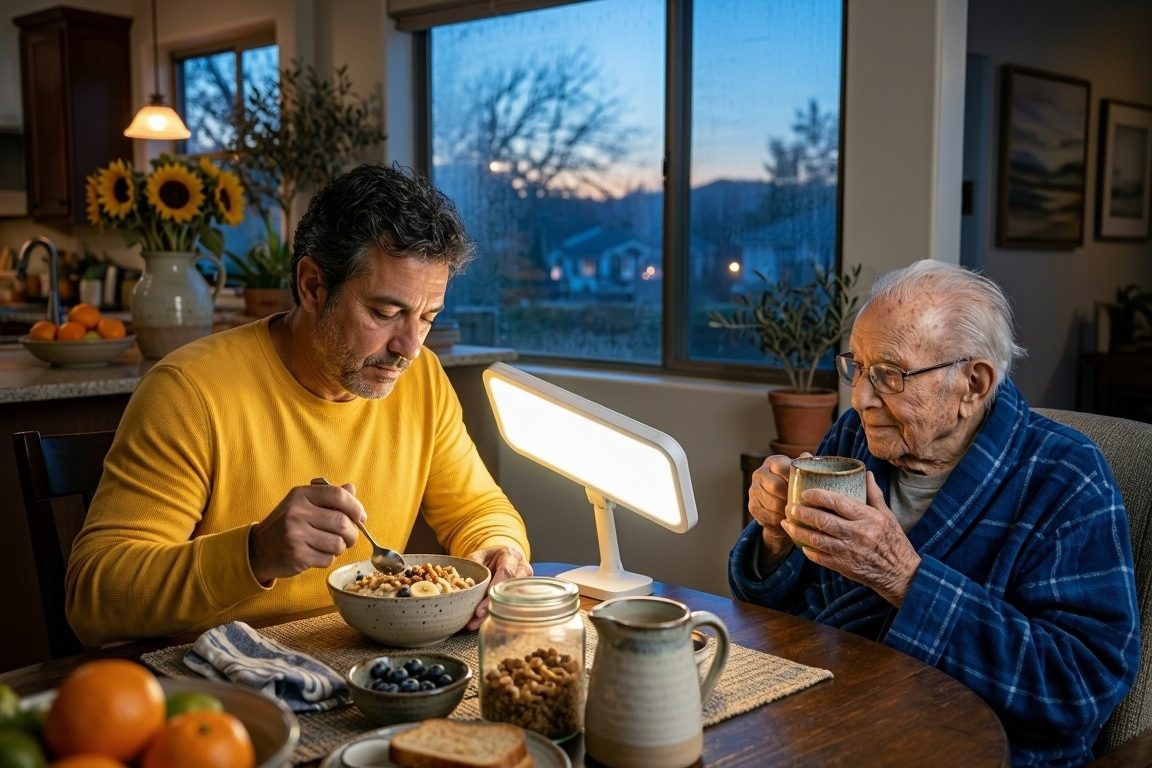
- Morning light exposure (natural sunlight or a 10,000 lux light box) within 30 minutes of waking resets your circadian rhythm and improves mood and focus.
- Dim lights and avoid screens 30–60 minutes before bed to allow your body to produce melatonin naturally.
- Use dim nightlights for safety at night, not bright overhead lights or TVs.
- Consider sleeping in a separate room if your loved one disturbs your sleep. Use a monitor or door alarm to stay safe.
- Combine light therapy with other sleep hygiene: consistent bedtime, no caffeine after 2 p.m., light dinner, and a calming routine.
Videos
 Sundowning In Dementia: What Role Does Light Play?Explains how light affects the body clock and sundowning, which directly impacts caregiver sleep when your loved one is restless at night.
 Sleep and DementiaCovers the science of sleep in dementia and practical light strategies that can help both the person with dementia and the caregiver.
 How Does Light Therapy Help Dementia Sundowning?Discusses how light therapy can reduce sundowning behaviors, which often disrupt caregiver sleep.
 Light therapy for dementia? Does it work?Reviews research on light therapy effectiveness, including its potential to improve sleep and reduce agitation.
2 more videos
 Can Light Exposure Reduce Sundowning In Dementia?Offers practical tips on using light exposure to manage sundowning, which can help caregivers get more rest.
 The Baffled Brain: Demystifying Dementia Episode 22 April 24 ,2021Covers sleep disturbances in dementia and the role of light, with caregiver-focused advice.
Background
Why Your Sleep Matters as Much as Your Loved One's
Caregivers often sacrifice their own sleep to monitor a loved one, but research confirms that caregivers become more ill than the persons for whom they care. When you sleep less than six or seven hours per night, your immune system weakens, your brain struggles with memory and learning, and your risk of depression and burnout skyrockets. Many caregivers feel guilty prioritizing their own rest, but the truth is: if you are exhausted, you cannot provide safe, patient care. Your sleep is not selfish, it is essential for both of you.
Light therapy offers a drug-free way to improve your sleep by stabilizing your own circadian rhythm. When you get bright light early in the day, your brain releases hormones that help you feel calm and focused, and it sets you up to produce melatonin naturally at night. This is not about forcing your loved one into a rigid schedule, it is about giving yourself the tools to rest, so you can show up with more energy and patience.
How Light Affects Your Body Clock (and Why Caregivers Are at Risk)
Your body's internal clock, or circadian rhythm, is heavily influenced by light exposure. In a world where artificial light is available 24/7, it is easy to confuse your brain into staying alert when it should be winding down. Caregivers often keep lights on at night for safety, to prevent falls or to check on a loved one, but this can backfire. Even a dim light in the bedroom or a TV left on can suppress melatonin production, making it harder to fall asleep and stay asleep.
Studies have shown that bright light therapy in the morning can improve sleep, reduce daytime napping, and decrease agitation in people with dementia. But the same principle applies to you. When you expose yourself to natural sunlight or a bright light box within 30 minutes of waking, you tell your brain: 'It is daytime, be alert.' Then, when you dim lights in the evening and avoid screens, you signal: 'Night is coming, time to rest.' This simple shift can dramatically improve your sleep quality, even if your loved one still wakes up.
Practical tools
6
10,000 Lux Light Box
Choose a light box that
Use it for 20–30 minutes while you eat breakfast or read, do not stare directly at it.
Blue-Blocking Glasses
Wear orange-tinted or amber blue-blocking glasses in the evening, especially if you must use screens after dark. Put them on 2 hours before bed for best results.
Dim-to-Warm LED Bulbs
Replace bright white bulbs in your bedroom and living areas with dim-to-warm LEDs that shift from cool white during the day to warm amber in the evening. Pair with a dimmer switch or smart app for gradual changes.
Motion-Activated Nightlight
Place a dim, motion-sensor nightlight in the hallway, bathroom, or your loved one's room so it turns on only when someone moves, enough light to prevent falls without flooding the room.
Sleep Diary Template
Track bedtime, time to fall asleep, number of night wakings, wake time, and how rested you feel (1–10) in a notebook or free app. After one week, look for patterns and share with your doctor if needed.
White Noise Machine
A small white noise machine in your bedroom can mask your loved one's nighttime vocalizations or movements, helping you stay asleep while still allowing you to hear urgent sounds.
Different situations
If your loved one has Lewy body dementia
People with Lewy body dementia are often extremely sensitive to light and may become agitated or hallucinate in bright or flickering environments. Use softer, indirect lighting during the day and avoid fluorescent or flickering bulbs. For yourself, you can still use a light box in a separate room. Consult your doctor before starting any light therapy for your loved one, as their visual system may react differently.
If you are a spouse caregiver sharing a bed
If your spouse's movements or vocalizations wake you, consider sleeping in a separate room. Use a baby monitor to hear if they need help, but you will get deeper sleep. If you must share a room, use a white noise machine to mask sounds and a sleep mask to block out any light from their nightstand. Prioritize your sleep, it is not a betrayal.
If you are an adult child caregiver living in the same home
You may feel guilty taking time for yourself, but your sleep is critical. Set a firm boundary: after 9 p.m., you are off-duty unless there is an emergency. Use a door alarm on your loved one's room so you are alerted if they get up, but you are not woken by every small noise. Morning light exposure can be done while you have your coffee, make it a ritual, not a chore.
If your loved one is in a facility
You may still struggle with sleep from worry or guilt. Use morning light therapy at home to stabilize your own rhythm. Visit during the day, not evening, to avoid disrupting their sleep. If you visit at night, keep lights dim and voices low. Your sleep matters even when you are not the primary overnight caregiver.
If you are on Medicaid or have limited budget
You do not need expensive equipment. Natural sunlight is free, sit by a window or step outside for 10 minutes each morning. Use a free sleep app or a simple notebook for tracking. Dim lights by using lower wattage bulbs or covering lamps with a scarf. Blue-blocking glasses can be found for under $10 online. Focus on the free strategies first.
For the doctor
5
- Ask your doctor: 'Is it safe for me to use a 10,000 lux light box if I have a history of migraines, bipolar disorder, or eye problems like macular degeneration?'
- Ask your doctor: 'Could my sleep problems be related to depression, anxiety, or a sleep disorder like sleep apnea? Should I have a sleep study?'
- Ask your doctor: 'Are there any medications I take that might interfere with my sleep or with light therapy?'
- Ask your doctor: 'If I am caring for someone with dementia, are there any specific risks of light therapy for them that I should know about before trying it?'
- Ask your doctor: 'What is a healthy sleep target for me given my age and health conditions? Should I aim for 7–9 hours?'