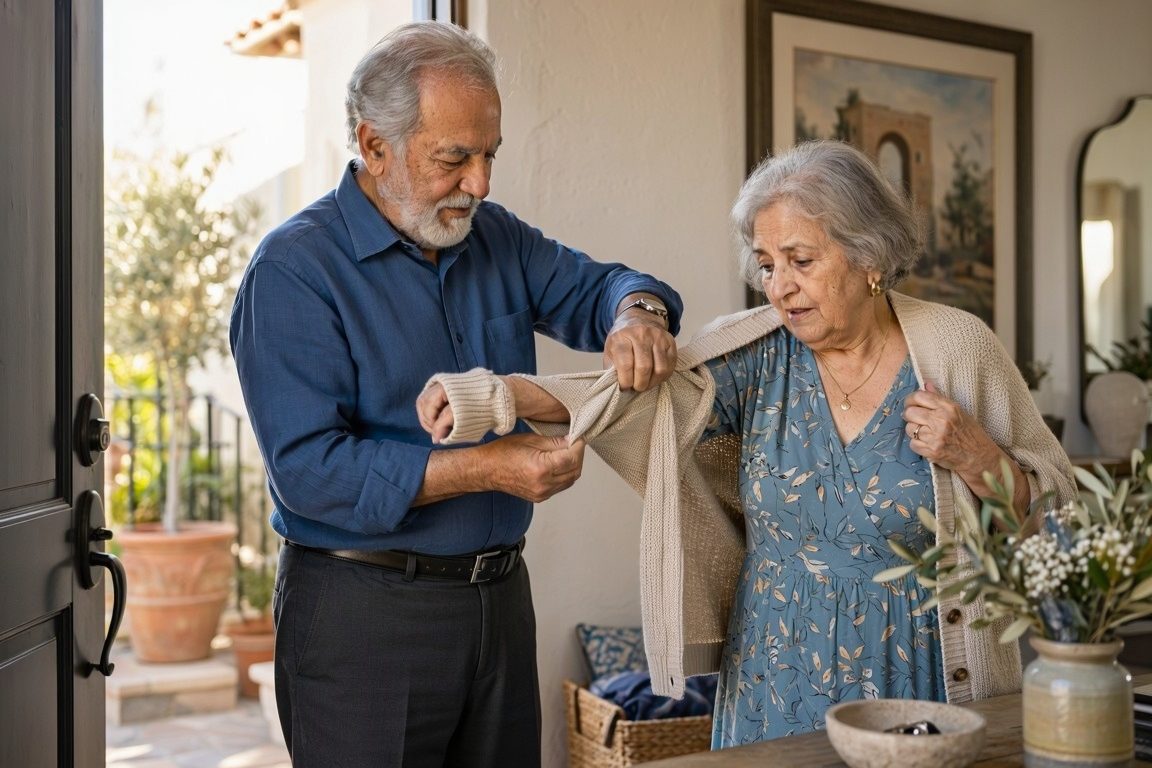
What not to do
- Do not correct or argue about facts, time, or identity.
- Do not rush or show impatience through tone or body language.
- Do not ask 'Do you remember...?' or test their memory.
- Do not talk about them as if they aren't present.
- Do not override their refusals without pausing to understand the distress behind them.
Key points
- Kindness is about joining their world, not correcting it. Therapeutic fibbing reduces distress and builds trust.
- Small, daily moments of connection (a touch, a compliment, a shared photo) matter more than any grand gesture.
- Be kind to yourself, notice the good in your own efforts. You are doing the best you can with the skills you have.
- Break tasks into tiny steps and schedule them for the best time of day. Forcing leads to combativeness.
- Comfort objects like soft blankets or mechanical pets can provide a sense of safety and reduce anxiety.
- Record legacy moments (voice, stories, songs) while you can, they will be priceless later.
Videos
 Self-Care Hacks Every Caregiver Needs to KnowThis video offers practical, quick self-care strategies that help you stay kind to yourself, which is essential for sustaining kindness toward your loved one.
 3 THINGS THAT HELP SOMEONE WITH DEMENTIA BE MORE ACCEPTING OF YOUR CAREDirectly addresses how to use kindness and approach to reduce resistance, perfect companion to the steps in this article.
 Lying To Someone With DementiaExplains the concept of therapeutic fibbing in depth, helping you feel confident using this tool without guilt.
 When You Want to Walk Away From Dementia Caregiving (But Can't)Validates the emotional struggle and offers strategies for staying kind to yourself when you feel like giving up.
2 more videos
 The Baffled Brain: Demystifying Dementia Episode 27 June 5 ,2021Helps you understand why the brain behaves the way it does, which builds empathy and patience.
 What Is A Good Gift To Give For Someone With Dementia?Provides concrete gift ideas that offer comfort and connection, directly supports the tools section of this article.
Background
What Kindness Really Means in Dementia Care
When someone is deeply forgetful, their brain is constantly trying to make sense of a confusing world. They may not remember what you said five minutes ago, but they will remember how you made them feel. Kindness in this context is not about being nice in a superficial way, it's about joining their reality, reducing their distress, and preserving their dignity. As one expert put it, people with dementia respond to kindness and warmth, and it can make the caregiving journey much easier for both of you (source 12).
Kindness also means recognizing that the person you care for is doing the best they can with the skills they have left. When they become agitated or say things that hurt, it's the disease speaking, not them. Holding onto your fond memories of who they were before the illness can help you respond with compassion rather than frustration (source 21). This shift in perspective is the foundation of truly kind care.
Why Kindness Matters for the Caregiver, Too
Kindness isn't just for the person with dementia, it's essential for you as the caregiver. Research shows that noticing the good in your loved one can reduce their agitation and make them more receptive to your care. But equally important is noticing the good in yourself. Caregivers are often incredibly hard on themselves, focusing on what went wrong instead of what went right. Purposefully looking for the good in your own efforts can protect you from burnout and help you keep going (source 2).
Kindness to yourself also means giving yourself permission to step back, get support, and create small daily rituals that anchor you. Legacy caregiving, creating small moments of dignity and connection, is not about perfection. It's about presence and intention, and those moments will matter long after the difficult days are over (source 5, 15).
Practical tools
3
Verbal validation prompts
Short phrases like 'I can see that bothers you' or 'That makes sense to you' to acknowledge feelings without correcting.
Gentle touch prompts
A light hand on the arm or shoulder during conversation can convey safety and connection when words fail.
Personal history cue card
A small card with the person's preferred name, key life roles, and meaningful topics to guide conversation and honor their identity.
Different situations
Late-stage dementia (bedbound, minimal verbal communication)
Focus entirely on sensory kindness: gentle touch, soft music, a warm hand massage, or a soft blanket. Use your voice in a calm, rhythmic way even if they don't respond. The goal is comfort, not engagement. Record their breathing or heartbeat if you want a legacy sound. Let go of expecting any reaction, your presence is enough.
Lewy body dementia (fluctuating cognition, hallucinations, movement issues)
Be extra careful with therapeutic fibbing, hallucinations may be very real and frightening. Join their reality even more gently. Use reassuring touch and a very calm voice. Avoid sudden movements. Schedule tasks for 'on' times when they are more alert. Be prepared for rapid shifts in mood and ability.
Adult child caregiver vs. spousal caregiver
Adult children may struggle with role reversal and guilt. Remind yourself that you are not their parent, you are their child offering love. Spousal caregivers may feel deep grief and loss of partnership. For both, self-kindness is critical. Adult children might benefit from sibling support; spouses may need a support group of other spousal caregivers.
Care in a facility (nursing home, memory care)
Kindness extends to advocating for your loved one with staff. Use the same principles: approach staff with warmth, not blame. Visit at times when you can offer a calm presence. Bring comfort objects from home. Record your loved one's voice or favorite songs to leave with staff. Ask about adult daycare or respite programs if you need a break (source 19).
Early-stage dementia (still aware of diagnosis)
Kindness here means honoring their autonomy and involving them in decisions. Ask, 'How can I help you feel more comfortable today?' Offer choices. Record their stories while they can still tell them. Be honest about your own feelings, they can handle it. This is the time to build a foundation of trust for later stages.
For the doctor
3
- If your loved one's agitation or aggression becomes frequent or severe, ask the doctor about possible underlying causes (pain, infection, medication side effects) before assuming it's just the dementia.
- If you are considering using any calming supplements or over-the-counter products (like melatonin or lavender), discuss with the doctor first, as they can interact with dementia medications.
- If you feel overwhelmed to the point of depression or anxiety, ask your own doctor about caregiver support resources, counseling, or respite care options.