Step by step
What not to do
- Do not force food, fluids, or medications into their mouth. This can cause choking, aspiration pneumonia, or distress.
- Do not insist on a feeding tube. It does not extend life in advanced dementia and can lead to infections or agitation.
- Do not wake them to eat or panic if they go a day or more without food or drink. Their brain has turned off hunger and thirst signals.
- Do not blame yourself. You are not causing their death by not feeding them; the disease is taking its natural course.
Key points
- Most people live 7 to 10 days after truly stopping eating and drinking, though some may pass sooner or linger up to three weeks.
- Your loved one is not hungry or thirsty because their brain has turned off those signals. This is a natural part of dying, not starvation.
- Do not force food, drink, or a feeding tube. These can cause discomfort and do not extend life in advanced dementia.
- Focus on comfort: keep them clean, turn them every 2 hours, provide mouth care, and watch for signs of pain.
- Take care of yourself. It is okay to ask for help, take breaks, and grieve. You are doing enough.
- Talk to the hospice team regularly. They are there to support both you and your loved one.
Videos
 Why Hospice Patients Stop Eating & DrinkingThis video explains the natural reasons why hospice patients stop eating and drinking, helping you understand that it is not a failure of care.
 How Dying Looks In Dementia With Hospice Nurse JulieHospice Nurse Julie walks through what the dying process looks like in dementia, including the timeline and what to expect, so you can feel prepared.
 End of Life Care for Patients with Dementia: Palliative Care & HospiceThis video covers palliative and hospice care for dementia patients, including how to manage comfort and what to expect at the end.
 Alzheimer’s Care: Why Won't My Loved One with Dementia Eat Anymore?This video addresses the common question of why loved ones stop eating and offers practical strategies for supporting them.
2 more videos
 What Is The Life Expectancy Of A Person With Dementia?This video provides an overview of life expectancy in dementia, helping you understand the broader context of the disease progression.
 5 Things I Learned about Dementia As an Open Heart Patient (+ My Hallucinations!)This personal story offers insight into the experience of dementia from a patient's perspective, including appetite changes and hallucinations.
Background
Why They Stop Eating and Drinking
In late-stage dementia, the brain undergoes significant changes that affect the body's ability to recognize hunger or thirst. The brain actually turns off the mechanisms that create those sensations, so your loved one is not suffering from hunger or thirst. As one hospice nurse explains, 'Your loved one is not dying because they are not eating and drinking; they are not eating and drinking because they are dying.' This is a normal, natural part of the body shutting down. The body's energy is being pulled inward to support major organs, and the urge to eat or drink simply fades away.
What the Timeline Looks Like
Once a person truly stops eating and drinking, death usually occurs within 7 to 10 days. However, some people may pass in just a few days, while others surprise everyone and linger for up to three weeks. One hospice nurse shared that the longest she has seen is about 21 days, though that is unusual. During this time, your loved one will likely be fully unconscious and not awake. They will not feel hunger or thirst because their brain has turned off those signals. The key is to focus on their comfort, not on trying to get them to eat or drink.
Why This Is Not Starvation or Dehydration in the Usual Sense
It is common to worry that your loved one is suffering from starvation or dehydration, but research shows that this process is not painful for the person. The body shuts down in a way that protects them from pain. In fact, forcing food or fluids can cause discomfort, such as choking, aspiration, or bloating. The disease itself, dementia, is what is causing the body to shut down, not the lack of food or water. As one expert notes, 'People don't die from dehydration and starvation; the disease called dementia does this to them.' Your role is to provide comfort, not to fix the eating.
Practical tools
4
Mouth Care Kit
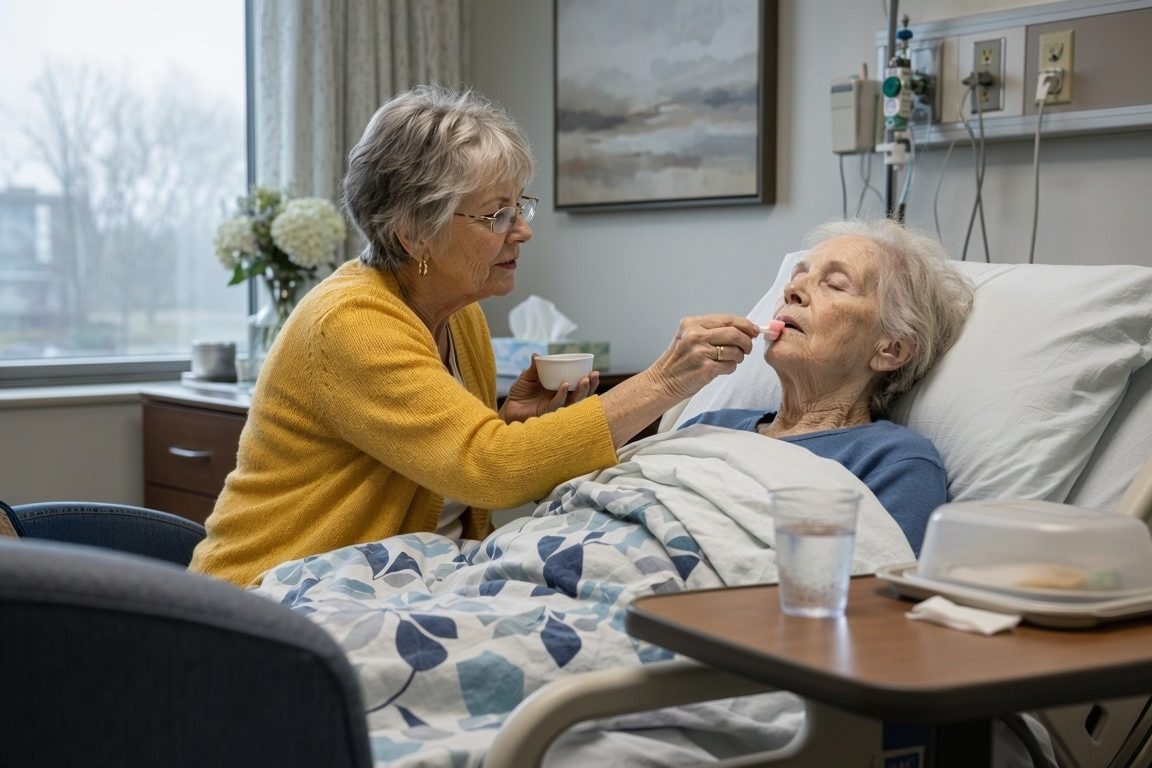
A small kit with a soft sponge or cloth, cup of water, lip balm, and small spray bottle. Moisten lips and inner mouth every 1-2 hours to prevent dry mouth without choking risk.
Comfort Checklist
Review every few hours:
If yes to all three, you are doing everything right.
Turning Schedule
Set a phone timer for every 2 hours. When it sounds, turn them from one side to the other, tucking pillows behind back and between knees to prevent bedsores.
Hospice Nurse Contact Card
Keep the nurse's number visible on the fridge or next to the bed. Call for any new pain, breathing changes, restlessness, or simply for reassurance.
Different situations
If your loved one has Lewy body dementia or Parkinson's disease dementia
These types of dementia may have a slightly different timeline, with some people living longer after diagnosis (up to 8 years on average). However, the end-of-life process of stopping eating and drinking is similar. Pay extra attention to swallowing safety, as these conditions can cause more severe swallowing problems earlier. Work closely with a speech therapist if available.
If you are a spouse caring for your partner at home
This is especially hard because you are losing your life partner. It is normal to grieve the loss of your relationship even before they pass. Make sure to maintain your own social circle and self-care. Consider joining a grief support group for spouses. It is okay to say, 'I cannot do this alone.'
If your loved one is in a facility (nursing home or hospice house)
You may have less control over daily care, but you can still advocate. Ask the staff to follow the comfort checklist: keep them clean, turned, and provide mouth care. Visit regularly if possible, but do not feel guilty if you cannot be there 24/7. The staff is trained to handle this.
If your loved one has other chronic conditions like diabetes or heart disease
These conditions may affect the timeline slightly, but the end-of-life process is still driven by dementia. Discuss with the hospice team how to manage medications (like insulin or blood pressure drugs) during this time. They may need to be adjusted or stopped to avoid discomfort.
If you are an adult child caring for a parent
You may feel pressure from other family members to 'do something' to keep your parent alive. Remind them gently that this is a natural process and that forcing food or a feeding tube can cause harm. Share what you have learned from this guide. It is okay to set boundaries and say, 'I am following the hospice team's advice.'
For the doctor
5
- Ask the hospice nurse: 'What signs of pain should I watch for, and what medications are available to manage them?' Do not give any pain medication without their guidance.
- Ask the doctor: 'Is a feeding tube appropriate for my loved one at this stage? What are the risks and benefits?' Research shows it usually does not extend life and can cause complications.
- Ask the hospice team: 'How do I know if my loved one is dehydrated or just naturally shutting down? What are the signs of dehydration versus normal end-of-life changes?'
- Ask the nurse: 'If my loved one seems to be in respiratory distress, what should I do? When should I call for help?'
- Ask the social worker: 'Are there support groups or counseling services available for me as a caregiver during this time?'