Step by step
What not to do
- Do not wait until the very end to enroll in hospice. Many families wait until the patient has only two weeks left, missing out on months of comfort care and support.Instead, have the conversation as soon as the doctor estimates six months or less. Early enrollment means more time for symptom management and emotional support.
- Do not assume hospice means giving up or that it is only for cancer patients. Hospice is a gift for dementia families, it provides dignity, pain relief, and practical help. Many people mistakenly think hospice is only for the final days, but it can be used for up to six months (and sometimes longer if the patient continues to decline). Talk to your doctor about it without fear.
- Do not try to manage end-stage dementia at home without hospice support. The 24/7 nurse availability, equipment, and medications are essential for keeping your loved one comfortable and for your own sanity. Without hospice, you may struggle to recognize pain or handle emergencies. Let the professionals help.
- Do not ignore your own emotional needs during this time. Caregivers often feel guilty for feeling relief or exhaustion. Hospice bereavement support is there for you, accept it. Join a support group, talk to a counselor, and allow yourself to grieve. You have been through a long, hard journey.
- Do not forget to ask about continuous care (crisis care) if your loved one's symptoms become unmanageable at home. This provides round-the-clock nursing care and can give you a much-needed break. It is part of the hospice benefit, so use it when needed.
- Do not stop communicating with the hospice team about changes in your loved one's condition. If you notice increased pain, agitation, or difficulty breathing, call the nurse immediately. They can adjust medications or provide guidance to keep your loved one comfortable.
Key points
- Hospice is not giving up; it is shifting focus to comfort, dignity, and quality of remaining life for both the patient and family.
- Enroll early, ideally when the doctor estimates six months or less, to get the full benefit of symptom management and support.
- Hospice provides a team (doctor, nurse, social worker, aide, chaplain, volunteers) and 24/7 phone support, plus medications and equipment at no cost to you.
- Bereavement support continues for up to a year after death, including grief counseling, support groups, and help with practical matters like death certificates.
- You do not have to do this alone. Accept help from hospice volunteers, use crisis care when needed, and lean on the hospice team for guidance and emotional support.
- Many families wait too long, most patients die within two weeks of starting hospice. Start the conversation now, even if you are unsure.
Background
What Hospice Care Is and Why It Matters for Dementia
Hospice is a specialized type of palliative care focused entirely on symptom management and comfort of body, mind, and spirit. Unlike standard medical care that aims to cure or prolong life, hospice care accepts that the end of life is near and works to make the remaining time as peaceful and dignified as possible. For dementia, this is especially important because the disease itself cannot be reversed, and aggressive treatments often cause more suffering than benefit. The primary goal of hospice workers is to provide physical and psychological comfort to patients nearing end of life, and they also offer extensive support to family caregivers who are navigating this challenging time.
When to Consider Hospice for Dementia
Dementia patients should be evaluated for hospice care when their condition has significantly progressed into the late stage. This typically means they exhibit advanced disease with severe functional decline, such as a FAST score of seven or higher, and a healthcare provider estimates a life expectancy of six months or less assuming the illness follows its usual course. Unfortunately, many families wait too long to enroll, and patients often pass away within just two weeks of starting hospice services. It is far better to have the conversation early and let hospice provide its full benefit, rather than waiting until things look dire. There is nothing wrong with asking your loved one's doctor about hospice eligibility even if you are unsure.
What Hospice Provides That Regular Care Does Not
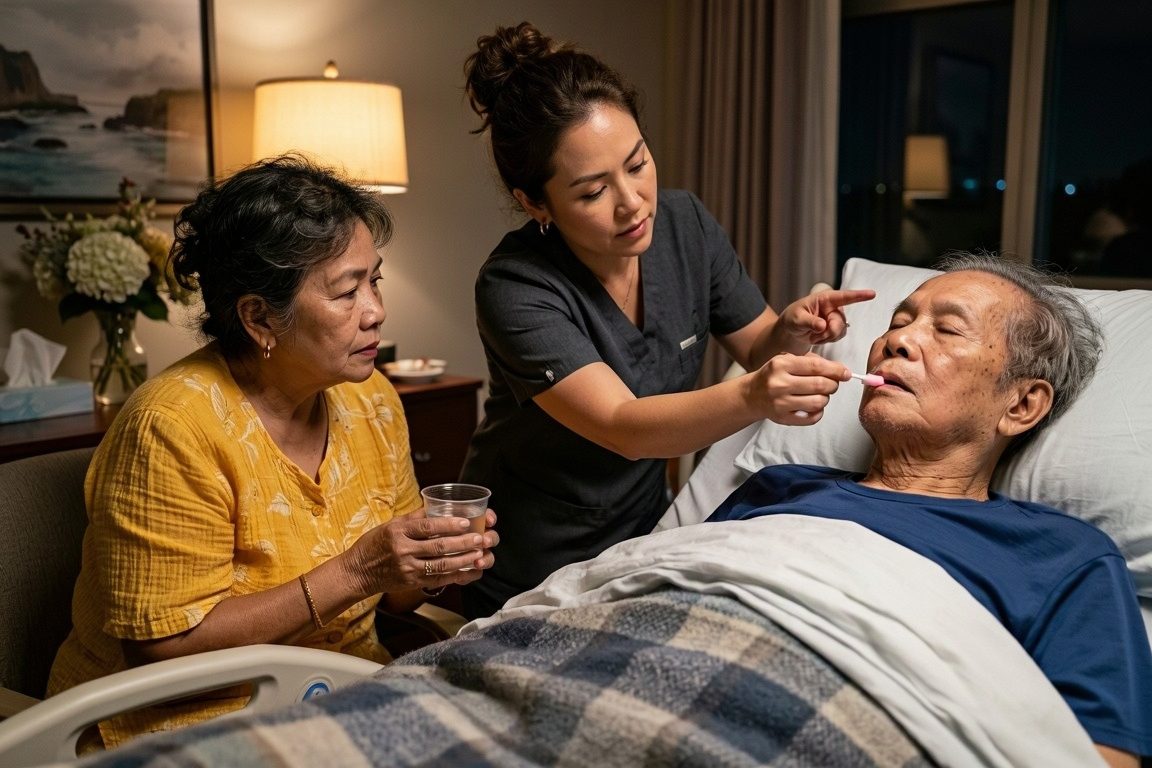
Hospice programs provide a team that includes a doctor, nurse, social worker, nurse's aide, clergy, and trained volunteers. They work together to address physical, emotional, and spiritual care for the patient as well as the family. Unlike palliative care, which can be given alongside curative treatments, hospice requires that the patient stop treatments aimed at curing the disease. In exchange, families receive 24/7 nurse availability by phone, regular nurse visits two to five times per week (mutually agreed upon), and the option for continuous crisis care if the family needs a break or the patient requires round-the-clock nursing. Hospice also supplies medications, equipment, and supplies related to the terminal diagnosis, and they educate family members on how to provide appropriate care and administer pain medications.
Emotional and Bereavement Support for Caregivers
Hospice care does not end when the patient passes. After a loved one dies, hospice facilities provide bereavement support for families that includes follow-up calls, grief counseling, support groups, and practical guidance with death certificates and funeral planning. This support continues for up to a year after death. Many family members feel relief when death finally happens, both for themselves and for the person who died, and hospice helps normalize those feelings while providing a safe space to process grief. The emotional support for the caregiver during the final stage is just as important as the care for the patient.
Practical tools
6
FAST Scale Reference Card
Print or save a copy of the Functional Assessment Staging Tool (FAST) scale. Look for stage 7, which includes sub-stages like 7a (limited speech), 7b (single words), 7c (loss of ambulation), 7d (inability to sit up), 7e (loss of smile), and 7f (loss of head control). Use this scale only as a discussion guide with your loved one's doctor, never rely on your own staging to make care decisions. Always confirm the stage with a healthcare professional before acting. Keep this card handy for doctor appointments.
Comfort Care Checklist for the Final Days
Create a simple checklist:
Post this checklist where you can see it. If at any point you are unsure about a step, stop and call the hospice nurse.
Phrases to Say to Your Loved One
Even if they cannot respond, hearing is believed to be the last sense to fade. Say things like: 'I am here with you. You are safe. I love you. It is okay to let go. Thank you for everything.' Avoid saying things that might cause guilt or anxiety, such as 'Don't leave me' or 'I can't do this without you.' Keep your tone gentle and reassuring.
Hospice Provider Interview Questions
Before choosing a hospice, ask these questions:
Write down the answers and compare providers.
Bereavement Support Calendar
After your loved one passes, mark on a calendar the dates of follow-up calls from hospice, support group meetings, and grief counseling sessions. Hospice typically provides these for up to a year. Also note important dates like the anniversary of their death or their birthday, and plan something gentle for yourself on those days, such as a walk or a call with a friend.
Medication Administration Log
Use a simple log to track when you give pain medication or other comfort meds. Include the time, dose, and any observed effect (e.g., 'restlessness decreased,' 'breathing eased'). Share this log with the hospice nurse during visits. This helps ensure your loved one stays comfortable and prevents accidental double-dosing. If you ever miss a dose or are unsure, call the hospice nurse before giving more medication.
Different situations
For Lewy body dementia (LBD)
Patients with LBD may experience severe fluctuations in alertness, hallucinations, and extreme sensitivity to medications. Work closely with the hospice team to avoid antipsychotics, which can be dangerous. Focus on non-pharmacological comfort measures like gentle touch, soft lighting, and familiar music. The FAST scale may not perfectly capture LBD progression, so rely more on functional decline and symptom burden.
For a spouse caregiver vs. an adult child
Spouse caregivers often have a longer history with the patient and may feel more guilt or reluctance to 'give up' on curative care. Adult children may be more willing to initiate hospice conversations but may face resistance from the other parent. Both should attend hospice meetings together and lean on the social worker for family mediation. Spouses may need extra bereavement support due to the depth of the loss.
If the patient is in a nursing home or assisted living facility
Hospice can be provided in the facility, and the hospice team works alongside the facility staff. About 67 percent of dementia-related deaths occur in nursing homes, so this is common. Ensure the facility allows hospice providers to visit and that the hospice team coordinates with the facility's nursing staff. The hospice social worker can help with Medicare paperwork and ensure the facility follows the comfort care plan.
For patients on Medicaid or with limited insurance
Medicare covers hospice for those who qualify, and Medicaid also covers hospice in most states. If your loved one has limited resources, ask the hospice provider about charity care or sliding-scale fees. Many hospice organizations are non-profit and will not turn anyone away. The hospice social worker can help you navigate financial questions and connect you with additional community resources.
For patients with frontotemporal dementia (FTD)
FTD often affects behavior and personality more than memory in early stages, but in late stages, physical decline mirrors Alzheimer's. However, FTD patients may retain more physical strength longer, making the transition to hospice less obvious. Use the FAST scale cautiously and focus on the patient's inability to perform basic activities of daily living (eating, walking, toileting) and the presence of complications like recurrent infections or swallowing difficulties.
For the doctor
5
- Ask your doctor: 'Based on the FAST scale and my loved one's current condition, do they meet the criteria for hospice eligibility? If not, what milestones should we watch for?'
- Discuss with the hospice nurse: 'What medications will be provided for pain, anxiety, and breathing difficulties? How do I administer them safely, and what side effects should I watch for?'
- Ask the hospice social worker: 'What advance directives are needed, and how do we ensure a DNR order is in place if that is our wish? What legal steps are required?'
- If your loved one has a feeding tube or is on antibiotics for infections, discuss with the hospice team whether continuing these aligns with comfort goals. Hospice typically focuses on discontinuing treatments that prolong life without improving comfort.
- Ask the hospice doctor: 'How do we handle sudden changes like a fall, infection, or severe agitation? When should we call 911 versus calling the hospice nurse?'