
Step by step
What not to do
- Don't assume all centers are the same, choose one that specifically advertises dementia or memory care services.
- Don't skip the in-person tour, seeing the center in action reveals what phone calls and websites cannot.
- Don't force a full day right away, start with a half-day to reduce stress for both of you.
- Don't let guilt stop you, respite helps you provide better care longer, and the structure and socialization benefit your loved one too.
- Don't overlook the total cost or assume you can't afford it, ask about all fees upfront and check for sliding scales, Medicaid waivers, and VA benefits.
Key points
- Start with your local Area Agency on Aging or the Alzheimer's Association to find dementia-specific adult day centers.
- Tour multiple centers and observe staff interaction, safety measures, and activity engagement, don't rely on phone calls alone.
- Ask about financial assistance: Medicaid, VA benefits, sliding scales, and scholarships can make adult day care affordable.
- Ease into it with a trial half-day, and use calm, structured language to help your loved one accept the change.
- Let go of guilt: adult day care provides essential socialization for your loved one and vital respite for you.
- Personalize your choice based on dementia stage, type, and your family's unique needs, one size does not fit all.
Videos
 How Do I Find Local Dementia Adult Day Care Services? - TestThis video walks through the exact steps to locate centers using aging agencies and the Alzheimer's Association.
 Where Can You Find Adult Day Care For Dementia Patients? - TestProvides additional tips on finding specialized dementia day programs and what to ask when you call.
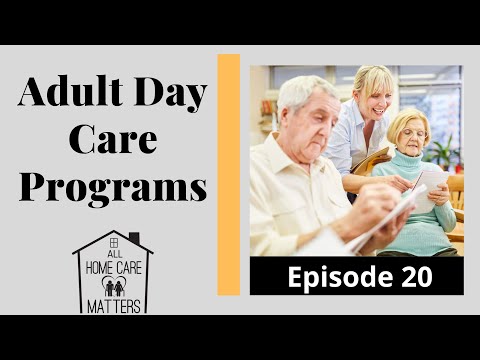 Adult Day Care ProgramsExplains the different types of adult day care (social, medical, specialized) and how to choose the right one.
 What Type of Caregiver are You?Helps you identify your caregiving style and how that affects your decision-making about respite options like adult day care.
2 more videos
 A Day at the Frenchtown Adult Day Center in Monroe, MichiganShows a real adult day center in action, activities, staff interaction, and the environment, so you know what to look for.
 How to get dementia help without needing a nursing homeDiscusses adult day care as an alternative to nursing homes, including cost comparisons and how to access it.
Background
Why Adult Day Care Matters for Dementia
Adult day centers provide structured activities, socialization, and supervision in a safe setting during daytime hours. For a person with dementia, these programs are vital because dementia often robs the individual of the internal ability to initiate activities on their own, they may appear uninterested, but they actually need the external structure and social engagement that a day program offers. Social isolation can accelerate cognitive decline, so regular interaction with peers and trained staff helps maintain function and mood.
The Caregiver's Need for Respite
Caregiving is demanding, and burnout is real. Adult day care gives you time to rest, run errands, work, or simply recharge, without guilt. Many caregivers feel selfish for taking time away, but this respite actually helps you provide better care longer. The program is a win-win: your loved one gets meaningful activity and social connection, and you get a break to sustain your own well-being.
What to Expect from a Quality Program
Not all adult day centers are the same. Some focus on social activities and meals, while others provide more intensive health services. A good dementia-specific center will have staff trained in memory care, a structured daily schedule (e.g., music, walks, crafts, outings), and safety measures like secure doors and wander management. Transportation and meals are often included. The center should also offer an initial assessment to match your loved one's needs with their services.
Practical tools
4
Script for the First Call
When calling a center, say: 'Hello, I'm looking into adult day care for my [mother/father/spouse] who has dementia. Could you tell me:
' Write down the answers.
Tour Observation Checklist
Print this list and take it on tours:
Transition Script for Your Loved One
If your loved one resists going, use a calm, structured approach. Say: 'We have an appointment today to go somewhere fun with other people.' Avoid arguing or explaining too much. Some centers recommend you stay for the first hour to help them settle, then slip out quietly.
Cost Comparison Worksheet
Create a simple table comparing:
Different situations
Early-stage dementia (mild cognitive impairment)
Your loved one may still be independent and socially active. Look for centers that offer stimulating activities like art classes, music, or gentle exercise. They may resist the idea of 'day care', frame it as a 'social club' or 'activity center.' A trial visit is especially important to see if they feel comfortable.
Middle-stage dementia (moderate impairment)
Safety is paramount. Choose a center with secure doors, wander management, and staff trained in redirection and de-escalation. Your loved one may have trouble communicating or may become agitated. Ask about the center's experience with these behaviors. A structured routine is key, look for a posted daily schedule.
Late-stage dementia (severe impairment)
Not all adult day centers accept late-stage participants. You may need a center that offers skilled nursing or medical oversight. Ask about staff-to-participant ratios (1:3 or better), and whether they can handle feeding, toileting, and mobility assistance. Some centers may recommend hospice or palliative care instead.
Lewy body dementia or Parkinson's disease dementia
These conditions often involve fluctuating cognition, visual hallucinations, and physical symptoms like stiffness or falls. Choose a center with staff trained in these specific challenges. Ask about fall prevention measures and how they handle hallucinations (e.g., do they redirect without arguing?). A center with a calm, low-stimulation environment may be best.
Spouse caregiver vs. adult child caregiver
Spouse caregivers often feel intense guilt about 'abandoning' their partner. Remind yourself that this break helps you care for them longer. Adult children may need to balance work and caregiving, look for centers with extended hours (e.g., 7 a.m. to 6 p.m.) and transportation. Both roles benefit from support groups offered at many centers.
Low income / Medicaid recipient
Cost is a major barrier, but many states offer Medicaid waivers that cover adult day care. Contact your Area Agency on Aging to apply. Some centers have sliding scale fees based on income, or offer scholarships. Also check if your loved one qualifies for VA benefits. Don't assume you can't afford it, ask about financial assistance first.
For the doctor
5
- Ask your doctor: 'Is adult day care safe for my loved one given their current health conditions (e.g., heart disease, diabetes, fall risk)?'
- Discuss: 'Are there any medications or health issues that might make adult day care challenging (e.g., incontinence, aggression, or swallowing difficulties)?'
- Ask: 'Can you recommend a center that has experience with my loved one's specific type of dementia?'
- If your loved one has behavioral symptoms: 'What strategies should I share with the day care staff to help manage agitation or wandering?'
- Inquire: 'Is there any medical reason my loved one should not attend adult day care (e.g., infection risk, unstable vital signs)?'