Step by step
What not to do
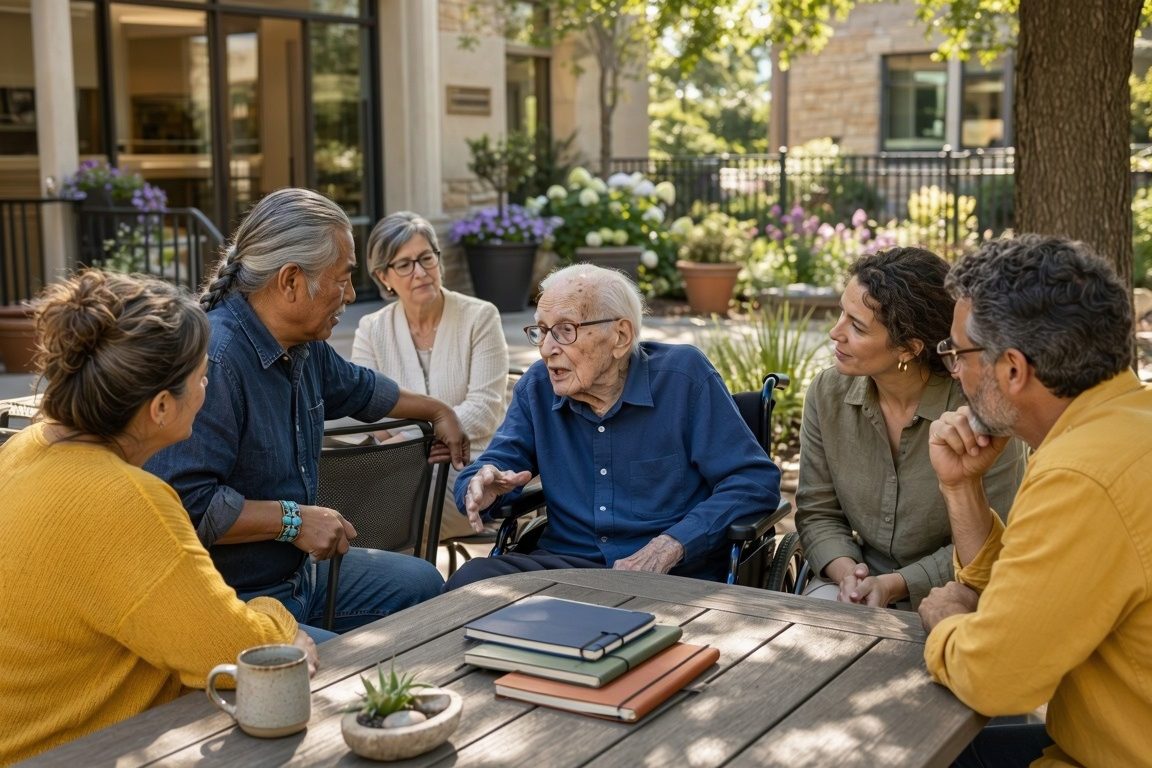
- Don't go in alone and angry. One angry family member is easily dismissed as 'difficult.' Instead, gather a group of calm, informed families. A group has leverage; an individual has a complaint.
- Don't threaten the administrator or staff. Threats create defensiveness and can lead to retaliation against your loved one.Instead, state your concerns factually and ask for their help in solving the problem. Frame it as a partnership.
- Don't assume the facility will tell you about family councils or your rights. They rarely volunteer this information. You must proactively ask and, if needed, create the group yourself.
- Don't let sibling disagreements stop you. If siblings disagree about care, focus on what you can control: your own advocacy. You can still attend care plan meetings, document concerns, and build relationships with staff. Your loved one needs at least one consistent advocate.
- Don't wait until a crisis to start advocating. Build relationships with staff and other families early, when things are calm. This makes it much easier to address problems when they arise.
- Don't ignore your own well-being. Advocacy is exhausting. Use respite care, adult day services, or volunteer programs to recharge. You can't be an effective advocate if you're burned out.
Key points
- Start by asking about a family council, if none exists, create one with other families.
- A group of families has far more power than one individual; gather signatures for complaints.
- Document everything: dates, times, observations, and conversations.
- Build relationships with staff, especially the social worker and director of nursing.
- If you suspect abuse or neglect, contact Adult Protective Services and an elder law attorney immediately.
- Use free tools like the Alzheimer's Association CareFinder and your state's Ombudsman program.
Videos
 Little Known Nursing Home LawThis video explains the legal right to a family council in nursing homes and how to use it to advocate for better care.
 Decisions About Putting A Parent Into a Nursing HomeHelps families navigate the emotional and practical decision of placement, which is the foundation for later advocacy.
 When Siblings Don't AgreeAddresses common family conflicts that can derail advocacy and offers strategies to move forward.
 How to Deal With Dementia in a ParentProvides practical communication and behavior management tips that are essential when advocating for a loved one with dementia in a facility.
2 more videos
 Annalee Kruger, Founder of Care Right Inc & Author of The Invisible PatientOffers expert insight into how families can become effective advocates and avoid common pitfalls.
 How Do I Know if a Parent Needs Memory Care or Assisted LivingHelps families understand the difference between care levels, which is critical when choosing or evaluating a nursing home.
Background
Why Family Advocacy Matters in Nursing Homes
Nursing homes are complex institutions with many residents, limited staff, and high turnover. Staff may be overworked and undertrained, especially in dementia care. Without a strong family presence, your loved one can become just another face in the crowd. Family advocates provide crucial information about the resident's history, preferences, and needs, information that staff may not have time to learn on their own. Research shows that when families are actively involved, residents experience better outcomes, staff feel more supported, and families themselves report greater satisfaction and less stress.
The Power of a Family Group
One family member speaking up can be dismissed. But a group of families speaking together has real power. Nursing home administrators are required by law to make a family council available, but they rarely volunteer this information. In fact, many families don't even know such groups exist. A family group gives you a collective voice to address systemic issues, like staffing shortages, poor food quality, or lack of activities, without fear of retaliation. When a complaint is signed by multiple families, it carries far more weight with regulators and the facility itself.
What Gets in the Way
Many families hesitate to advocate because they fear retaliation against their loved one. This fear is real, but it can be managed. Other barriers include sibling disagreements about care, guilt about placing a loved one, and simply not knowing where to start. You may also feel exhausted from years of caregiving. But remember: advocacy is not about being confrontational, it's about being informed, persistent, and collaborative. You don't have to do it alone.
Practical tools
6
The Family Group Starter Script
When approaching another family member in the lobby: 'Hi, I'm [name], my [mom/dad] is in room [number]. I'm trying to connect with other families to see if we can work together to make things better here. Would you be open to meeting for coffee to talk about it?' Keep it low-pressure and friendly.
The Documentation Log
Keep a small notebook or use a notes app on your phone. For each visit, record: date, time, what you observed (e.g., 'Mom was in wet brief at 2pm, call light not answered for 30 min'), who you spoke with, and what was promised. This log is your evidence if you need to file a complaint.
The Complaint Letter Template
When filing with the state Department of Health, include:
If you have a group, have multiple families sign.
The Care Plan Meeting Checklist
Before each care plan meeting, write down:
Bring this list to the meeting.
The 'Ask the Doctor' Phone Script
When calling to attend a doctor appointment by phone: 'Hello, I'm [name], [resident]'s [daughter/son]. I understand there's an appointment on [date] at [time]. I would like to join by phone. Can you provide the call-in number and time? I have some questions I'd like to ask the doctor about [specific concern].'
The Alzheimer's Association CareFinder Tool
This free online tool helps you evaluate care options and understand what quality care looks like. Use it to compare your loved one's facility against best practices. It also provides checklists for what to look for during visits.
Different situations
If your loved one has dementia (especially Alzheimer's or Lewy body)
You need to be even more proactive because your loved one cannot speak for themselves. Focus on communication strategies: use a whiteboard in the room to note daily routines, preferences, and any changes in behavior. Attend every care plan meeting and ask for a consistent caregiver assignment if possible. Dementia residents often do better with familiar faces. Also, be aware that dementia behaviors (like aggression or refusal of care) are common and not a sign of staff failure, but they do require staff to be trained in dementia care. If you see staff using restraints or chemical restraints (medication to sedate), that is a red flag and should be reported.
If you are an adult child (vs. spouse)
You may face challenges with siblings who disagree about care. If siblings are not helping, focus on what you can do alone. You can still be the primary advocate. If siblings are actively undermining care (e.g., taking money or making decisions without consulting you), you may need to seek legal advice about power of attorney or guardianship. The earlier you do legal planning, the better.
If your loved one is on Medicaid
Medicaid residents have the same rights as private-pay residents, but some facilities may provide lower quality care to Medicaid residents. Be extra vigilant. You have the right to request a transfer to another facility if care is substandard. The state Ombudsman program can help you navigate this. Also, know that Medicaid pays for nursing home care, but not for 'custodial' care in assisted living, so if your loved one needs a nursing home, Medicaid is often the only option.
If you suspect abuse or neglect
Do not wait. Call the state's Adult Protective Services (APS) hotline immediately. You can also call the facility's administrator and the local police if there is immediate danger. Document everything. Contact an elder law attorney who specializes in nursing home abuse. Many offer free consultations. Do not confront the alleged abuser directly, let authorities handle it.
If you are in Arizona (or another state with specific resources)
In Arizona, you can contact nursinghomeadvocates.com for legal help specific to nursing home abuse and neglect. For other states, search for 'nursing home advocates [your state]' or contact your state's Long-Term Care Ombudsman. The Ombudsman is a free, confidential resource that investigates complaints and advocates for residents.
For the doctor
4
- If your loved one is being given antipsychotic or sedative medications without your knowledge or consent, ask the doctor: 'Why is this medication being prescribed? What are the side effects? Is there a non-drug alternative?'
- If your loved one has a fall or injury in the facility, ask: 'What caused this fall? Was the call light working? Was the bed alarm on? What changes will be made to prevent it from happening again?'
- If your loved one has a feeding tube or is being restrained, ask: 'Is this medically necessary? What are the alternatives? Can we try a different approach first?'
- If you are considering moving your loved one to a different facility, ask the current doctor: 'What level of care does my loved one need? Are there any medical conditions that would make a transfer risky?'