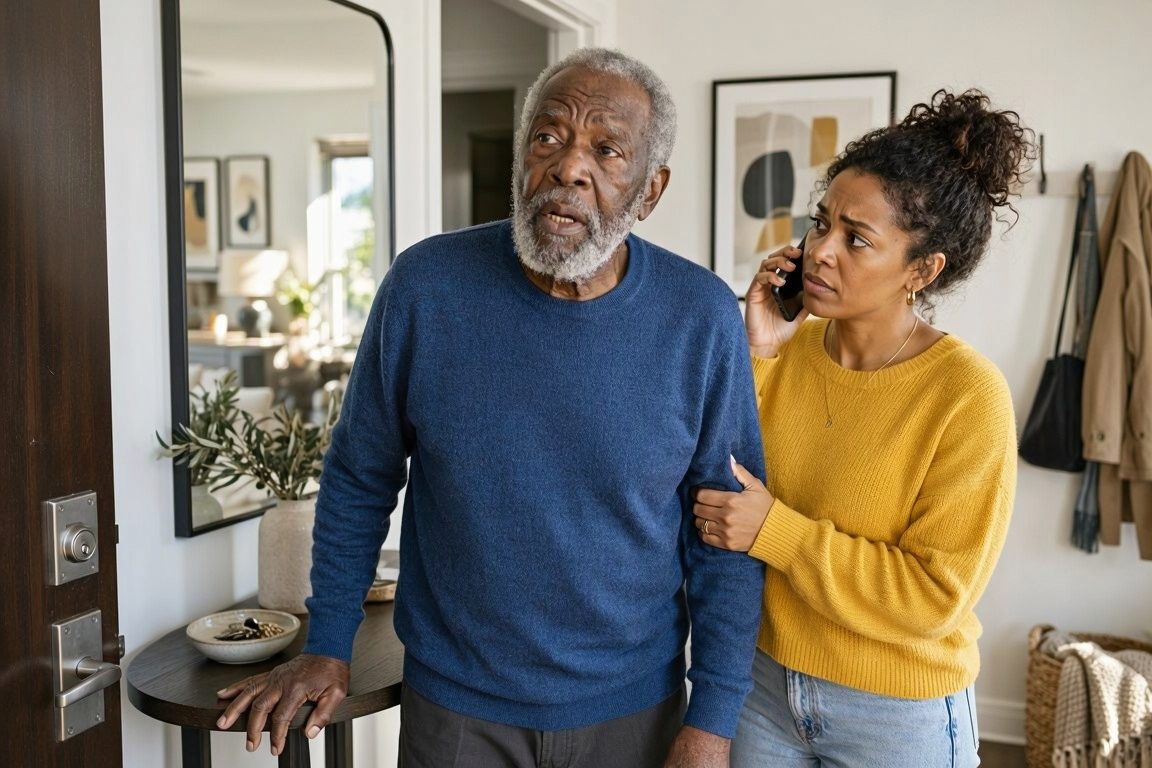
Step by step
What not to do
- Do not finish their sentences.
- Do not rush them.
- Do not shout.
- Do not wait to see if sudden aphasia passes, call 911 immediately.
Key points
- Aphasia is a language disorder, not a loss of intelligence, treat the person with respect and patience.
- Sudden aphasia is a stroke warning sign; use the FAST acronym and call 911 immediately.
- Use short sentences, yes/no questions, gestures, and picture cards to support communication.
- Never correct every mistake; validate the effort and rephrase naturally.
- Fatigue worsens aphasia, rest is a powerful tool.
- You are not alone: free resources and support groups are available for caregivers.
Videos
 What Is Aphasia?A clear, short overview of aphasia causes and types, great for first-time understanding.
 Understanding Aphasia In DementiaExplains how aphasia appears specifically in dementia, with practical caregiver tips.
 10 Warning Signs of Early Alzheimer’s Disease – HOP ML PodcastHelps you distinguish normal aging from early warning signs, including language changes.
 Caring for Someone with Alzheimer’s - Family Caregiver Webinar SeriesComprehensive webinar covering communication strategies and caregiver self-care.


Background
What Is Aphasia and What Causes It?
Aphasia is a condition that disrupts the language networks in the brain. It can affect how a person understands what others say (receptive aphasia), how they speak or write (expressive aphasia), or both. The most common cause is a stroke, where a blood vessel in the brain becomes blocked or ruptures, cutting off oxygen to language areas. Brain damage from a severe head injury, a tumor, an infection, or a degenerative disease like Alzheimer’s can also cause aphasia. In dementia, aphasia often appears gradually as brain cells in the language regions slowly degenerate, this is called primary progressive aphasia and may eventually lead to more generalized dementia.
How Does Aphasia Show Up Day to Day?
A person with aphasia may struggle to find the right word, substitute a wrong word (like calling a pencil a ‘cup’), speak in short or fragmented sentences, or have trouble following a conversation. They might also have difficulty reading or writing. It is incredibly frustrating for both the person and the caregiver, imagine knowing exactly what you want to say but being unable to get the words out, or hearing words that don’t make sense. The key is to remember that this is not intentional or a sign of confusion; it is a brain-based language problem. In dementia, aphasia often coexists with memory loss and other cognitive changes, but it is a distinct symptom that requires specific communication strategies.
When Is Aphasia an Emergency?
Sudden onset of aphasia, especially if it comes with one-sided weakness, facial drooping, confusion, trouble walking, severe headache, or vision changes , can signal a stroke and requires immediate medical attention. Use the FAST acronym: Face drooping, Arm weakness, Speech difficulty, Time to call 911. Even if symptoms seem mild or go away quickly, they could be a transient ischemic attack (TIA or mini-stroke) and need urgent evaluation. In dementia, gradual worsening of aphasia is expected, but a sudden change in language ability, especially with other new symptoms like agitation, excessive sleepiness, or inattention to one side of the body, should be discussed with a clinician right away.
Practical tools
1
Communication notebook
Write down key words, names, and phrases the person uses often. Show it when they are stuck. Helps track changes over time.
Different situations
Lewy body dementia or Parkinson’s dementia
Aphasia in these conditions often fluctuates day to day or even hour to hour. Do not assume a bad day means permanent decline. Use the same strategies but be extra patient during ‘off’ times. Also watch for visual hallucinations or movement issues that may confuse communication, ask ‘Do you see something?’ rather than arguing.
Late-stage dementia
In advanced stages, the person may lose almost all verbal language. Focus on nonverbal communication: gentle touch, eye contact, music, and simple routines. Use a communication board with only 2–3 pictures. Do not push for words; instead, validate emotions with phrases like ‘I am here with you.’ Discuss with the clinician about comfort care and reducing stimulation.
Spouse vs. adult child caregiver
Spouses may feel a deep sense of loss and grief because language was central to their relationship. It is okay to grieve. Join a support group for spouses of people with aphasia. Adult children may need to balance care with their own family, use the communication notebook to share updates with other family members and set boundaries to avoid burnout.
Living in a facility
Share a one-page communication guide with staff: list the person’s favorite phrases, triggers, and strategies that work (e.g., ‘Always offer two choices,’ ‘Use picture cards’). Request that staff speak directly to the resident, not about them. Visit during meal times to observe if communication difficulties are affecting eating or hydration.
Medicaid or limited resources
Free resources: the National Aphasia Association (aphasia.org) offers free support groups and a helpline. Your local Area Agency on Aging can provide free caregiver training. Use homemade picture cards and a simple notebook. Ask the clinician about speech therapy, some states cover it through Medicaid. Do not hesitate to use online videos (see below) for free education.
For the doctor
4
- If aphasia appears suddenly, especially with facial drooping, arm weakness, or confusion, this is a medical emergency. Call 911 immediately, do not wait for a doctor’s appointment.
- If aphasia is gradually worsening and you notice new symptoms like memory loss, personality changes, or trouble with daily tasks, ask the clinician about a cognitive assessment and brain imaging to rule out stroke, tumor, or progressive dementia.
- If the person with aphasia also shows signs of depression, anxiety, or agitation, discuss with the clinician whether a referral to a speech-language pathologist or a mental health professional is appropriate. Do not start any medications without medical guidance.
- If you are unsure whether a sudden language change is a stroke or a ‘bad day’ with dementia, err on the side of caution and seek emergency evaluation. It is better to be safe.