Step by step
What not to do
- Don't wait to see if your loved one comes back on their own; start searching immediately and call for help within 15 minutes if you cannot find them.
- Don't scold or punish them after they are found; they were confused or trying to meet an unmet need, so offer reassurance, a warm drink, and a calm redirect to a favorite activity.
- Don't rely on memory or verbal reminders alone; use physical barriers (locks, alarms, fences) and visual cues (signs, labels) instead.
- Don't leave them alone in a car, even for a minute, a parked car can become dangerously hot or cold, and they may try to exit and wander into traffic.
- Don't assume a GPS tracker alone is enough; combine tracking with environmental safety measures and a neighborhood alert system for a layered approach.
- Don't ignore the emotional root of wandering; offer meaningful activities like folding laundry, sorting photos, or walking together to ease the urge to exit.
Key points
- Wandering is a common dementia symptom, not a behavioral choice. It often reflects an unmet need like boredom, anxiety, or the need to move.
- Create a written wandering safety plan with a recent photo, medical info, and emergency contacts. Share it with neighbors and local police.
- Use a combination of environmental safety (locks, alarms, fences), GPS tracking, and a neighborhood notification system for layered protection.
- If your loved one goes missing, act immediately: search the house and yard, then the immediate neighborhood. Call 911 within 15 minutes if not found.
- Never scold or punish after a wandering event. Offer calm reassurance and review what triggered the episode to adjust your plan.
- Personalize your approach based on the stage of dementia, the specific type (e.g., Lewy body), and your relationship (spouse vs. adult child).
Videos
 KNOW WHAT TO DO if your loved one wanders away: Make a dementia wandering safety planThis video walks you through creating a written safety plan, including what information to gather and who to notify. It is practical and step-by-step.
 How Do You Keep Someone With Dementia Safe From Wandering? - Dementia Help HubThis video covers home safety modifications like door locks, alarms, and fences, plus the importance of addressing emotional needs to reduce wandering.
 Dementia Wandering: Prevention + What to Do If They Go Missing | Dr. Khushboo VermaDr. Verma explains the medical perspective on wandering, including triggers and the critical first steps when a person goes missing.
 How Do GPS Tracking Devices Improve Dementia Safety? - Dementia Help HubThis video explains how GPS trackers work, the types available (bracelets, shoe inserts, etc.), and how to use them effectively.
Background
Why Wandering Happens: It's Not 'Bad Behavior'
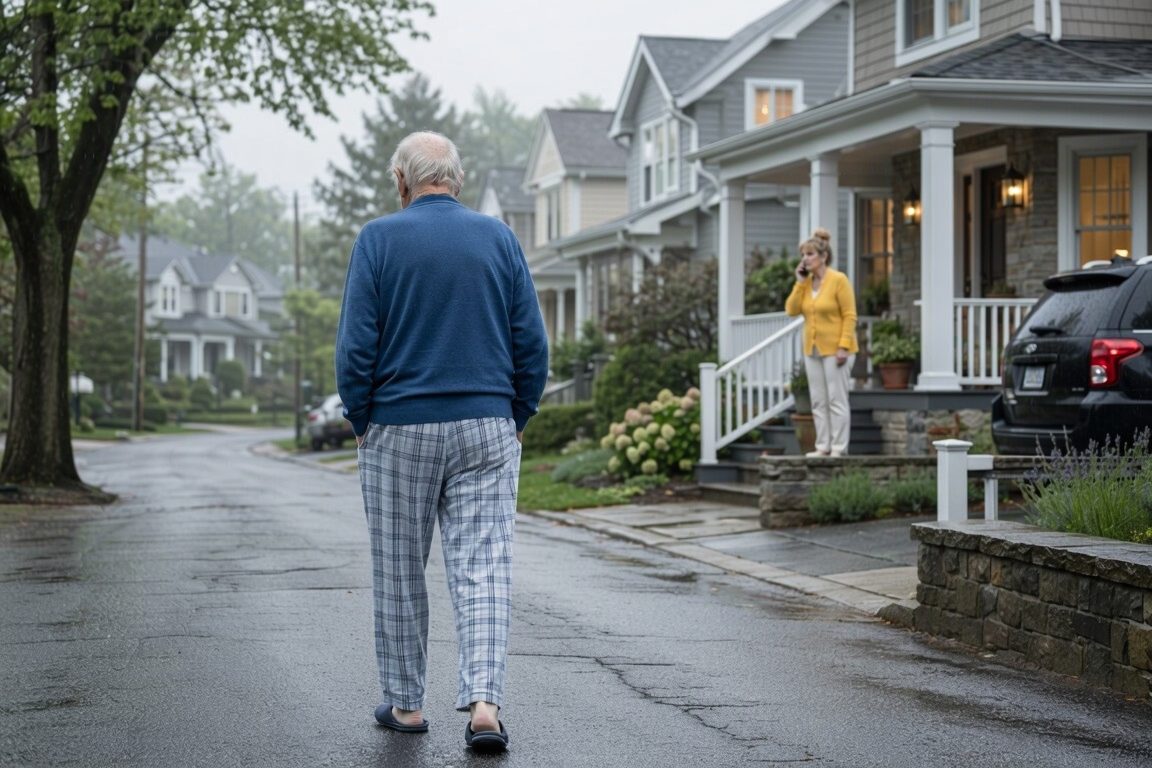
Wandering is not a deliberate act of defiance or a sign that your loved one is 'being difficult.' In dementia, the brain loses its ability to process familiar cues, remember where 'home' is, or express needs like thirst, boredom, or anxiety. A person may get up to go to the bathroom, become disoriented in a changed environment, and then walk out the door searching for something that feels familiar, like a past home or a former workplace. This is called 'exit-seeking,' and it is a common behavior: about 6 out of 10 people with dementia will wander at least once, and many will repeat it. Understanding this as a symptom, not a choice, is the first step to responding with compassion and effective action.
The Real Danger: Time Is Critical
When a person with dementia wanders away, the clock is ticking. Research shows that if they are not found within 24 hours, the risk of serious injury or death rises sharply. Many wanderers are found within a mile of home, but they can become disoriented quickly, especially in extreme heat, cold, near water, or in high-traffic areas. This is why a proactive plan, not panic, is essential. You can reduce the risk by making your home safer, using tracking devices, and alerting neighbors and local authorities ahead of time. And if a wandering event does happen, you have a clear, practiced response that buys precious minutes.
Wandering Is Often a Sign of an Unmet Need
Before you focus solely on prevention, ask: What is my loved one trying to communicate? Wandering can be a way of expressing stress, boredom, anxiety, or even a need for physical activity. Sometimes it is driven by sundowning, increased confusion and agitation in the late afternoon or evening. By addressing the underlying need, offering a safe walking path, providing a purposeful activity, or reducing overstimulation, you may reduce the urge to wander. This is not about 'locking them in,' but about creating an environment where their needs are met safely.
Practical tools
6
Wandering Safety Plan Sheet
A one-page document with:
Keep copies by the door, in your car, and in your wallet. Update the photo every 3 months.
Door and Window Alarms
Battery-operated alarms that chime or beep when a door or window is opened. Place them on all exterior doors and easily accessible windows. Choose models with a chime-only daytime mode and a loud alarm for nighttime. Test them weekly.
GPS Tracking Device (Bracelet, Shoe Insert, or Clip-On)
Choose a device that is comfortable and hard to remove, such as a GPS smart bracelet (e.g., AngelSense or Jiobit) that sends real-time location to your phone and lets you set a safe zone alert. If your loved one removes jewelry, use a device sewn into a shoe sole or clipped inside a hat. Test the battery and signal every week.
Pressure-Sensitive Floor Mats
Battery-powered mats placed beside the bed, in front of an exit, or by a favorite chair that alert you the moment your loved one steps on them, especially helpful for nighttime wandering.
ID Bracelet or Labeled Clothing
A medical ID bracelet engraved with 'Memory Loss: Call [your number]' or clothing with sewn-in name-and-contact labels. Low-tech, never runs out of battery, and helps strangers or first responders assist your loved one if found.
Visual Door Signs (Picture Labels and STOP Signs)
A kit of picture labels and signs:
Different situations
Early-stage dementia (mild cognitive changes)
In early stages, your loved one may still be able to use a cell phone or a simple GPS device. Consider a smartwatch with fall detection and GPS (like an Apple Watch with cellular). Also, establish a daily check-in routine: 'I will call you at 10 am and 2 pm to make sure you are okay.' If they still drive, have a conversation about alternative transportation and consider a GPS tracker in the car. Wandering at this stage may be more about disorientation on familiar routes, so practice walking together and point out landmarks.
Middle-stage dementia (moderate cognitive decline)
This is the most common stage for wandering. Your safety plan must be robust. Use all the tools: door alarms, GPS tracker, neighborhood notification, and a fenced yard. At this stage, your loved one may not recognize that they are lost, so they may not call for help. The GPS tracker is essential. Also, consider enrolling in a local Project Lifesaver or Safe Return program if available. If you live near water, busy roads, or cliffs, take extra precautions, lock gates and consider a professional monitoring service.
Late-stage dementia (severe cognitive decline)
Wandering may decrease as mobility declines, but it can still happen if they are able to walk. At this stage, your loved one may be in a wheelchair or bedbound, but they could still attempt to exit if they are mobile. Focus on environmental safety: lock all doors and windows, use bed alarms, and never leave them unattended. If they are in a facility, ensure the staff has a wandering prevention plan and that you have a copy of their photo and medical info. GPS trackers may be less useful if they are not ambulatory, but a door alarm is still critical.
Lewy body dementia or Parkinson's dementia
These types often involve visual hallucinations, fluctuating cognition, and sleep disturbances (REM sleep behavior disorder). Wandering may be triggered by hallucinations (e.g., seeing a person or animal that they follow). Address the hallucinations with your clinician, sometimes medication adjustments help. Also, because sleep is disrupted, nighttime wandering is more common. Use nightlights, bed alarms, and a safe walking path. Avoid physical restraints, as they can increase agitation. Instead, use redirection and calming activities.
Adult child caregiver vs. spouse caregiver
As an adult child, you may have more energy to implement safety measures but less authority to enforce them. Approach your parent with respect: 'Mom, I'm worried about you getting lost. Let's try this bracelet together, it will help me feel less worried.' As a spouse, you may be more emotionally attached and find it harder to accept the need for locks and alarms. Remind yourself that these tools are for safety, not imprisonment. In both roles, seek respite care and support groups, caregiver stress makes it harder to think clearly during a crisis.
For the doctor
6
- Ask your doctor: 'Could my loved one's wandering be related to a medication side effect, such as a new sedative or anticholinergic drug? Should we review their medications to see if any could be contributing to confusion or restlessness?'
- Ask your doctor: 'Are there any non-pharmacological interventions (like music therapy, pet therapy, or structured activities) that might reduce wandering by addressing underlying anxiety or boredom?'
- Ask your doctor: 'If wandering becomes frequent or dangerous, what are the options for a higher level of care, such as a memory care unit with a secure outdoor area? When is it time to consider that?'
- Ask your doctor: 'My loved one has hallucinations that seem to trigger wandering. Should we consider a medication adjustment or a referral to a neurologist or geriatric psychiatrist?'
- Ask your doctor: 'Are there specific types of door locks or alarms that are recommended for safety without being too restrictive? I want to make sure we balance security with the ability to exit quickly in an emergency.'
- Ask your doctor: 'What is the safest way to use a GPS tracker for my loved one? Are there any privacy or legal concerns I should be aware of?'